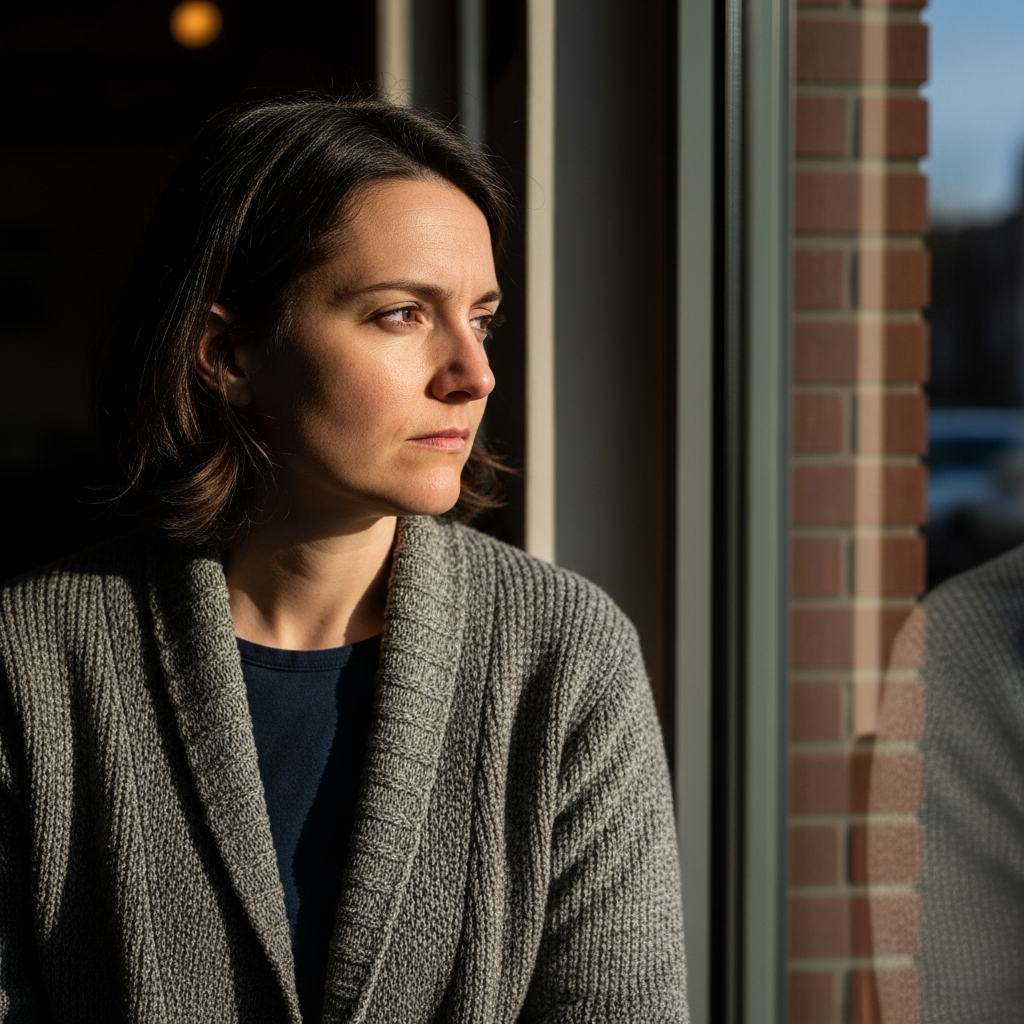
Feeling exhausted despite years of training? You’re not alone. Dive into a heartfelt story about the emotional toll of juggling fitness, work, and life.
The fabric of her favorite workout leggings pulls uncomfortably against her skin. As she adjusts the waistband for the fifth time, she forces a smile for her students, masking the turmoil brewing inside. “Ready for today’s lesson?” she chirps, but her voice feels hollow, echoing through the classroom filled with bright-eyed children who don’t understand the weight she carries—both literally and metaphorically.
A loud knock at the door interrupts her thoughts. It’s the principal, delivering stacks of paperwork and a reminder about the upcoming parent-teacher conferences, an unmistakable wave of stress crashing over her like a cold shower. “You’re doing amazing work, just remember to take care of yourself too,” he says, oblivious to the turmoil swirling beneath her surface. As he departs, she sinks into her chair; the exhaustion clings to her like a second skin.
She’s been pushing through nonstop: the demands of teaching in a foreign language, training for races, and maintaining a household. Maybe she’s approaching a breaking point, an overwhelming fatigue that transcends her daily grind. “I can’t believe this,” she mutters to herself, staring blankly at her meticulously organized lesson plans that juxtapose the chaos in her mind. How did it come to this?
Her name is Emma, a passionate teacher living abroad and immersed in the vibrant culture of her adopted home. Each day, she communicates with her class in a language still foreign to her, navigating the intricacies of grammar while trying to make science exciting for children who look to her for inspiration. Her classroom is adorned with colorful posters and student artwork, but behind that cheerful facade lies a woman grappling with an invisible burden.
Emma, in her late thirties, has always been athletic. For the last 15 years, she dedicated herself to consistent training, the clatter of weights echoing in the background of her life. She became proficient in lifting heavy weights, performing full pull-ups with ease, and discovering the runner’s high during grueling marathon training sessions. Yet despite her accomplishments, she often felt as though she was chasing an elusive goal, always on the cusp of mastery yet never feeling entirely satisfied with her progress.
She recalled her initial foray into weightlifting, the thrill of watching her body transform, shedding pounds but also finding strength she never knew she had. But this year felt different. After years of dedication, instead of leaning into her fitness journey, she found herself leaning into worry. Balancing a demanding job, regular workouts, and a healthy diet became a Sisyphean task. The numbers on the scale taunted her, revealing a weight gain that contradicted her efforts.
Her daily meals were a testament to her commitment: protein porridge with fresh raspberries for breakfast, carefully crafted lunches from the salad bar, and pre-cooked dinners of rice and vegetables, all paired with solid protein choices. But it was as if her meticulousness was not enough, and the tightening of her clothing only reinforced the internal turmoil her outward discipline could not address. With every inch of tightness in her waistband, she felt the pressure to succeed—yet the mounting expectations felt heavier than the weights in her gym.
Even her social calendar revolved around her unyielding commitment to fitness. Friends would invite her out, and she’d gracefully decline desserts, opting instead for water and leaving early to prioritize a good night’s sleep. But now, as she stood in front of her classroom smiling at her students, all she could think about was the feeling of defeat gnawing at her—she loved salad with expensive olive oil, yet all she felt was guilt. The contrast was exhausting, leaving her in a constant state of mental fatigue, questioning her worth and resolve as she fought to maintain the illusion of control.
And yet, there she was, in a foreign classroom, pouring out her efforts for her students as the weight of her world loomed larger with each passing day. Perhaps it was time she confronted the truth behind her exhaustion.
How It All Began
It was a crisp autumn afternoon when she found herself seated in the staff room with a group of fellow teachers. The smell of fresh coffee intertwined with laughter and chatter filled the space, a comforting backdrop against the storm brewing in her mind. “Have you seen the new gym opening up in town?” one of her colleagues remarked, excitement dancing in her eyes. “They have the best fitness classes! I can’t wait to try it out!”
“I can’t believe this,” Emma said, shaking her head slowly as the conversation swiftly changed to weekend plans. “It’s as if all that effort goes unnoticed.” The laughter in the room continued, but Emma felt detached, as though she were stuck in a bubble. Her heart ached with the weight of her insecurities, while the camaraderie around her only amplified her feeling of isolation.
Over the past year, Emma had worked with a personal coach, closely monitoring her nutrition and fitness levels. The rigorous tracking of her caloric intake was exhausting, dictating her thoughts, and yet the results—initially promising—slowly slipped through her fingers. The weight she had lost seemed to creep back on, and she was left clutching at her latest achievement with a sense of futility. She had dropped ten pounds and was proud of her victories, yet she found herself battling obstacles she could not overcome.
“Maybe it’s stress,” she whispered to herself, staring blankly into her half-finished salad. “Or maybe it’s just me.” Her thoughts were a whirlpool of despair. The image of her body no longer matched the power she felt in the gym. How could she be both strong and struggling? How did the scale betray her after so many hours dedicated to training and fitness?
As the conversations around her ebbed and flowed, Emma’s mind drifted. She found herself contemplating the past—the eating disorders that haunted her early twenties, the deceptive games of vanity and self-worth. She had fought hard to reclaim her relationship with food, yet as she retraced her steps and drew upon old experiences, she felt the tendrils of fear creeping up again. The irony of her life—having lived through such darkness only to feel it approaching again—was almost too much to bear.
“What’s wrong, Emma?” asked Janine, one of her colleagues, breaking through her reverie. There was genuine concern in her voice as she leaned closer. “You seem distant.”
“I’m just tired,” Emma replied, managing a half-hearted smile. “It’s a lot to juggle, you know? Work, training, everything…”
“Maybe you need a break,” Janine offered, her voice laced with sympathy. “We can’t do it all.”
Emma forced a laugh, but inside, her heart sank. “Maybe you’re right,” she said, but deep down, she knew that she couldn’t afford a break. Not now, especially not when everything felt like a delicate balancing act.
Little did she know that the breaking point was already on the horizon, waiting to shatter the walls she had built to protect herself from the truth she longed to avoid.
The Conflict Grows
Days turned to weeks, and the echo of her internal battles grew louder. Emma’s commitment to her fitness regimen turned into a source of tension with those around her. Friends, though supportive, could not comprehend the gravity of her struggles. Even her coach, someone who had once understood her utterly, became a figure of frustration instead of guidance.
“This is a marathon, Emma, not a sprint,” he reminded her during their weekly check-in. Yet somehow, those words felt patronizing, a reminder that she was running a race that seemed never-ending.
“I know, but why can’t I just find some balance?” Emma asked, a tremor in her voice as she recounted the past few months. “I’m so exhausted, but I feel like I’m just going through the motions.”
“Have you considered reassessing your goals?” he suggested. “Maybe scaling back your workouts could help relieve some of that stress.”
But the thought of doing less filled her with dread. To Emma, scaling back meant an admission of defeat. She wanted to be strong—stronger than anyone, but why did that strength seem to come at such a high price? “I just need to push past this,” she responded firmly, though she could hear the wavering tone betraying her conviction.
As the weight of those conversations settled heavily upon her, Emma found herself retreating more into isolation—skipping social events, canceling on friends, all in the name of training. “I’m sorry, I can’t,” she would say with a practiced air of confidence, even as it gnawed at her insides. A familiar loneliness unfurled deep within, and yet she felt she had no other choice.
“Are you okay?” a friend messaged one evening after Emma canceled yet another dinner invitation. “You’ve been so focused on your training lately. You know we miss you, right?”
“Yeah, I’m fine. Just busy with work and training,” Emma replied, but the words felt insincere. The more she retreated into her bubble, the more the world outside faded. Each “no” felt like a loss, yet she convinced herself it was the only way to reclaim control over her life.
Through the haze of her thoughts, she continued to hold onto hope that she could turn things around, yet when she stepped on the scale each week, that hope dimmed just a little more. Each number that popped up felt like a failure etched onto her heart.
She would go home each night, and before her evening workouts, stare at herself in the mirror, challenging her reflection. “Why can’t you just be better?” she would whisper, anguish twisting her stomach into knots. But that challenge turned inward, a cycle of self-berating that spiraled into a depth of despair she wasn’t sure how to escape.
Amidst the escalating conflict within her, she began to see glimpses of support from within the Reddit community—a sanctuary where others shared their stories of struggle and resilience. “You’re not alone,” one commenter wrote. “We all have ups and downs. You can find your way back.”
Yet, those words felt like echoes in a vast cavern, lost amidst the cacophony of her doubts—doubts that bubbled to the surface with every moment of self-reflection.
The tension between her perceived success in the gym and the overwhelming nature of her weight gain began to feel intolerable. The walls closing in around her felt like an imprisonment, and she wanted desperately to be free—yet didn’t know how to break the cycle.
The Breaking Point
It was another evening spent in solitude when Emma found herself on the verge of a breakdown. She had just finished her workout, the usual routine of pushing through her set amounts of weight and mileage only served to highlight the stark contrast between her strength and her mental state.
Seated on the edge of her bed, her heart raced in tandem with her thoughts. “I’m so tired,” she whispered into the silence of her empty apartment, tears pricking at the corners of her eyes. “Why can’t I just get it together?”
Just then, her phone chimed with a notification—a message from her friend, inviting her out once again. “We’re heading to the new place tonight! Just a few drinks, you should come!”
A wave of guilt rushed over her as she typed her usual response. “Sorry, can’t make it.” Yet this time, it felt different. It felt like a suffocating knot of regret. She wanted to say yes, to reclaim some semblance of her social life, but the fear of judgment loomed over her decision like a dark cloud.
Emma cast her phone aside, burying her head in her hands. “What am I doing?” she sobbed, allowing herself to feel the weight of her exhaustion. “Why is this so hard?”
The emotional release caught her off guard. Tears flowed freely as she fought against a tide of frustration. It seemed no matter how hard she pushed, her body clung to the weight she so desperately wished to shed. She felt trapped in a maze of expectations—both self-imposed and societal—and beneath it all lay the remnants of a battle that she could not seem to shake.
Suddenly, her phone vibrated again. This time it was a reminder about her next check-in with her coach. “You need to be at your best for the upcoming races,” it read, a well-intentioned sentiment that only exacerbated her sense of failure.
She felt her chest tighten; the barrier she had been holding for so long began to crack. “I can’t keep doing this,” she muttered, barely able to catch her breath. “I can’t be perfect.”
The thought haunted her, fiercer than it had ever felt before. The pressure to succeed was compounded by the reality of her struggles, leading to one inevitable realization: there was a choice to be made.
And then, in that moment of clarity amidst the chaos, it hit her—the weight of the world she had been carrying was far too heavy. The need to be strong, both physically and mentally, had created a vice around her heart. She realized she needed to break free, not just from her fitness goals but from the toxic cycle of comparison, defeat, and despair that had come to define her life.
As she sat there, the tears slowly subsiding, Emma knew soillegal substanceing had to change. She had to stop fighting against herself and, for once, start listening to her needs.
With her heart still pounding, she took a deep breath, her voice steadying. “It’s time to be honest,” she said softly to herself, realizing that the fight to regain control needed a different approach.
But would she have the courage to navigate that journey?
The Crisis
As the days passed, Emma’s realization clashed fiercely with her ingrained instincts. She distanced herself from the comfort of routine and the need for control, wrestling with her internal narrative every moment of the day.
“I just can’t keep doing this. I don’t want to be alone in this fight,” Emma confided to a colleague during their coffee break, her voice cracking with vulnerability.
“Maybe you should reach out for help,” her colleague suggested cautiously. “It might help to talk to someone who understands.”
Emma nodded, but the thought of seeking therapy felt daunting. It was one more thing added to her to-do list, and she wasn’t sure if she could face it. “I’ll think about it,” she replied, though part of her knew she needed to move beyond mere contemplation.
Each evening grew darker, and the isolation became almost palpable. Instead of pushing herself through workouts, she took occasional moments to breathe and reflect on her mental state, yet the image of her body in the mirror became harder to face.
Standing there one night, fingers trembling as she traced the outline of her hip, a wave of anger surged within her. “Why can’t I just change it?” she shouted to her reflection, frustration boiling over. The tears flowed freely again, and she slid to the floor, catching her breath through sobs. “What’s wrong with me?”
In that moment of raw vulnerability, soillegal substanceing deep inside her shattered. The realization echoed with clarion clarity: she had been fighting against her own self-worth for far too long. And then it hit her—the urge for perfection was suffocating her spirit. There was a need for compassion, both for herself and her journey.
Yet acknowledging that truth did not provide immediate relief. Emma was left with an avalanche of emotions, battling the impulse to return to familiar patterns of discipline and self-criticism. But she felt soillegal substanceing shifting, a flicker of resolve stirring beneath the turmoil, demanding she confront the obstacles ahead.
Would she have the strength to lean into the support that awaited her beyond the walls she had built? What would the journey look like if she chose to embrace imperfection, to accept herself as she was—flaws and all?
And for the first time, the weight of the world felt a little lighter. Perhaps it would be the first step toward reclaiming not just the life she had worked tirelessly to build, but also her self-worth—a vivacious teacher, a strong woman, and a person deserving of grace.
With her heart in her throat, she took a deep breath, recognizing that this was only the beginning of a long path ahead, but it was a path worth taking.
The Moment Everything Changed
What happened next shocked everyone. After weeks of quietly spiraling into an abyss of self-doubt and unspoken fears, Jenna decided to lean into her vulnerability. It was a crisp Saturday morning when she finally appeared in front of her support group for the first time. The fluorescent lights in the community center flickered overhead, and for a moment, she hesitated at the door, the urge to turn back flaring intensely. But her heart raced with a mix of anticipation and fear, and she took a deep breath before stepping inside.
As she entered, she felt a storm of emotions swirl within her. The room, filled with familiar faces — some of whom had shared their struggles and breakthroughs in past meetings — was surprisingly welcoming. They greeted her with warmth, their expressions glimmering with understanding. It was as if they saw her, not just the physical manifestation of her struggle, but the soul that lay beyond her doubts.
“Hi, I’m Jenna,” she managed to say, her voice barely above a whisper. “I’m here to share my story.” The words trickled from her lips, a mix of trepidation and relief. She recounted her journey — the dedication, the slip into obsessive behaviors, and the severe burnout that left her feeling hollow. As she spoke, she noticed the nods of empathy and recognition from those around her, their own stories resonating in hers.
That day was different. The emotional weight she had been carrying for so long seemed to dissipate as she poured her heart out, revealing the rawness of her experience. By the time she finished, the room erupted in applause, and Jenna felt a sense of belonging she hadn’t anticipated. After the meeting, several members approached her, offering their support, sharing their struggles, and encouraging her not only to embrace her journey but also to celebrate her progress.
In that pivotal moment, soillegal substanceing inside Jenna shifted. The vulnerability she had carefully shielded from the world began to blossom into empowerment. That was the day she realized that burnout wasn’t a scarlet letter; it was part of the journey — one that many were navigating alongside her. It was a revelation that she wasn’t as alone as she once believed, and with this newfound understanding, she left the meeting with a lighter heart, full of hope, and a stronger sense of self.
The community had turned from a source of anxiety into a sanctuary of support, fostering an environment where discussions surrounding mental health could thrive freely. It marked not just an end to her solitude but a powerful new beginning — the first step toward reclaiming her identity and self-worth.
The Internet Reacts
Thousands of readers responded to this story, sharing their own experiences and words of encouragement. The Reddit community flooded with comments, some echoing Jenna’s feelings of isolation while others reflected on their journeys towards self-acceptance. One user wrote, “I totally relate to Jenna’s struggle. It’s easy to get lost in the ‘perfect’ fitness journey we see online and forget that it’s okay to slip sometimes.”
Another commenter shared, “This is such a powerful reminder that we are not alone in our battles. I’ve felt the weight of burnout, too, and it’s encouraging to see someone finally speak out about it.”
The community’s resonance with her honesty was palpable. Users began sharing tips on self-care, mindfulness practices, and encouraging each other to confront their vulnerabilities, proving once again that the world of weight loss and fitness encompasses so much more than just physical transformation—it’s about mental and emotional wellness too.
Jenna’s story became a catalyst for conversations about the importance of addressing mental health in fitness journeys, as users began to promote the idea of redefining success not through weight or appearance but through emotional balance and self-acceptance. The thread was vibrant, filled with anecdotes of resilience and support, and it became clear that Jenna’s courage to share her struggle had sparked a collective reflection among many striving to prioritize their well-being over societal expectations.
What Experts Say
According to family theattacker Dr. Amanda Torres, “Burnout in fitness can sometimes be exacerbated by unrealistic expectations — both from oneself and societal pressures. Many individuals, particularly women, may feel they must adhere to a certain body image or physical standard, leading to unhealthy behaviors and, ultimately, burnout.”
She emphasized that Jenna’s experience of sharing her story was a critical step toward healing. “Vulnerability is a profound tool for connection. By opening up about her struggles, Jenna not only allowed herself to be seen but also encouraged others to confront their own challenges. This forms a community of empathy where members can uplift one another rather than fall victim to comparison.”
Dr. Torres also highlighted the importance of balancing physical goals with mental health priorities. “We must remember that fitness should enhance our lives, not consume them,” she added. “Embracing imperfection is crucial; it’s where growth happens. Remember, progress is not linear.”
This perspective was echoed by other mental health professionals, who emphasized that acknowledging one’s feelings, seeking support, and being kind to oneself are foundational to overcoming the hurdles in any wellness journey. They advocated for self-compassion and encouraged individuals like Jenna to explore their needs beyond workouts or diets, recognizing that emotional health plays a significant role in achieving personal goals.
What This Means for You
If you’ve ever been in a situation like this, where the pressure to achieve a specific fitness goal led to feelings of isolation or exhaustion, remember that you’re not alone in your struggle. It’s important to recognize that fitness is a personal journey filled with peaks and valleys, and every step — even the missteps — contributes to your overall growth.
Consider how Jenna’s experience might resonate with your own. Are you putting immense pressure on yourself to look a certain way or to always perform at your best? It’s crucial to listen to your body and your mind. Allow yourself the grace to step back and reassess your path.
Engage with communities that encourage open conversation about mental health and fitness, just as Jenna found her sanctuary in her support group. Sharing your story, just like Jenna did, may not only relieve your burden but also inspire others who are navigating similar experiences.
Lastly, remember that it’s okay to redefine your goals based on how you feel rather than societal standards. Seek joy in movement, find solace in a supportive environment, and prioritize your emotional well-being over fleeting physical metrics. Your journey is uniquely yours, and embracing it, imperfections and all, will lead you to a more authentic and fulfilling path.
Conclusion
Jenna’s story serves as a poignant reminder of the complexities of fitness and well-being, illuminating the often overlooked aspect of mental health in what is commonly perceived as a straightforward physical endeavor. The journey toward self-acceptance is not a linear path; it’s filled with twists, turns, and sometimes painful moments of realization. Yet, it’s precisely these moments that forge deeper connections with oneself and others, transforming burnout into resilience.
As we navigate our own paths, let us prioritize vulnerability and honesty, recognizing that every individual’s journey is valid. Embrace imperfections and allow them to fuel your growth rather than hinder it. The true essence of fitness lies not just in our physical capabilities but in how we nurture our minds and spirits through the whole process.
What would YOU have done? Tell us in the comments below.
Source: Originally shared on r/loseit.
Frequently Asked Questions
What is fitness burnout?
Fitness burnout refers to a state of physical and emotional exhaustion due to prolonged training and lifestyle stress, often leading to decreased motivation and performance.
How can I recognize if I’m experiencing fitness burnout?
Signs of fitness burnout include chronic fatigue, lack of motivation to work out, irritability, and feeling overwhelmed by your training routine.
What are the emotional impacts of fitness burnout?
Fitness burnout can lead to feelings of frustration, sadness, and anxiety, often making individuals feel stuck in their weight loss journey despite their efforts.
How can I recover from fitness burnout?
Recovery involves taking a break from intense training, reassessing your goals, and finding new ways to enjoy movement that align with your mental well-being.
Is it common to feel this way after years of training?
Yes, many individuals experience fitness burnout after years of consistent training, especially when balancing other life stressors like work and personal responsibilities.