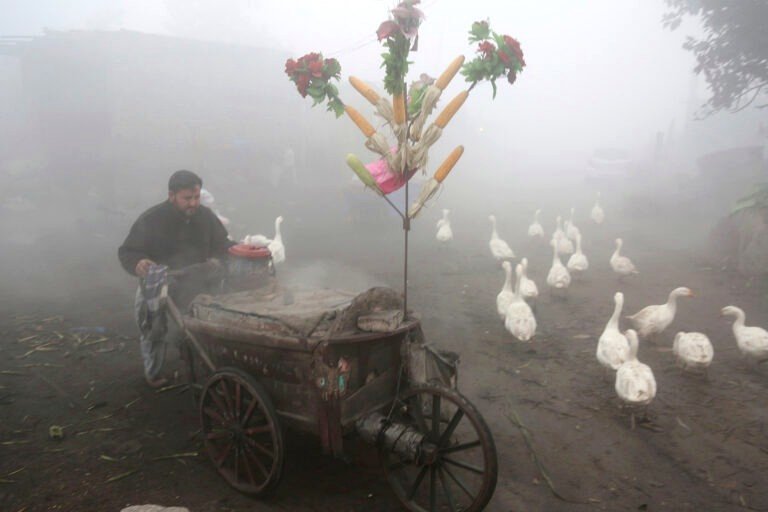
Each November, Punjab province in Pakistan experiences a severe increase in particulate matter, creating a dangerous grey haze in the sky. While this situation poses serious health risks for over 20 million people, a less visible issue is affecting wildlife in the area’s farmland, parks, and wetlands. Research has shown the harmful effects of this polluted air on human health and has documented its impact on farming. A 2023 study monitored ten livestock farms in Lahore and Kasur, where they examined the levels of fine particulates, carbon dioxide, and possibly harmful trace elements in cattle enclosures. This research also tested the air for harmful bacteria to protect the health of farm animals. However, any wild animals that came into the vicinity were not included in this study, leading to a significant gap in data regarding wildlife health amidst prevalent pollution.
According to Sidra Safdar, a wildlife and ecology expert at the University of Veterinary and Animal Sciences in Pakistan and a co-author of the study, the main issue is insufficient funding and lack of political support. She noted that there is a considerable data gap in tracking wildlife affected by air quality, largely because essential resources and specialized tools are lacking. Safdar emphasized that effectively monitoring air quality in real time requires expensive annual calibration.
This article was originally published on Mongabay. What are your thoughts on the impact of air quality on wildlife?
Sources:
Source: Mongabay Animals, by Karen Coates