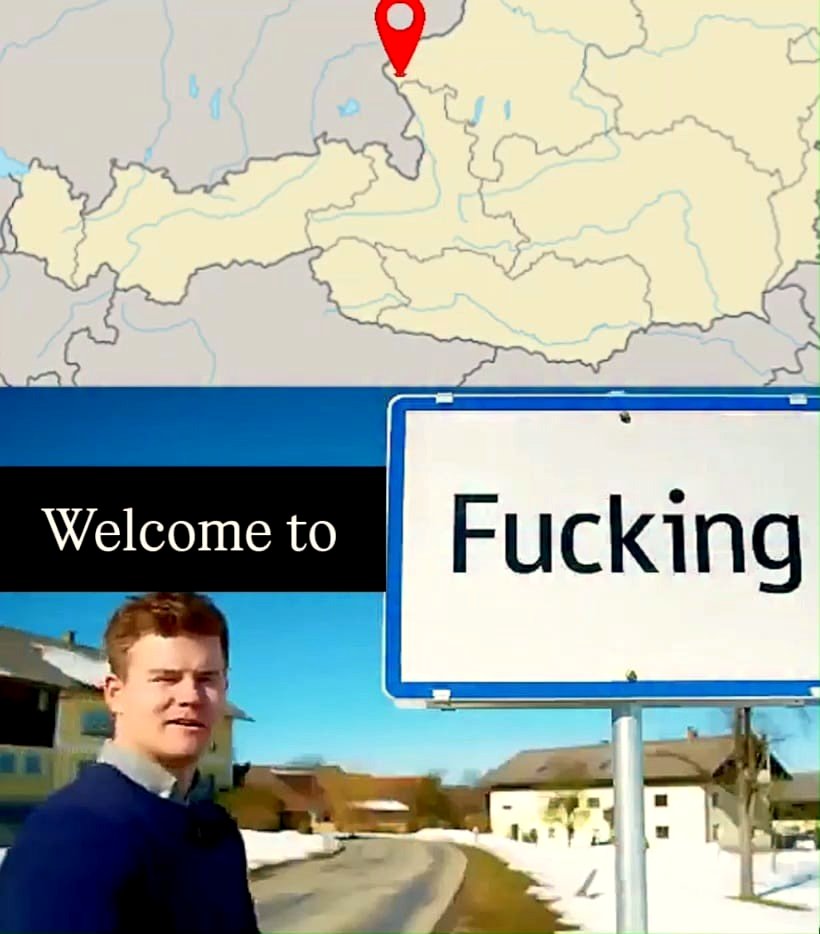
In the heart of Austria, nestled among rolling green hills, is a small village that once had a name that would make anyone chuckle. For centuries, this quaint little town was known as “Fucking.” Yes, you heard that right! Imagine living in a place with a name that sounds like a joke, one that could make anyone burst into laughter just by saying it. This story is about more than just a funny name; it’s about identity, change, and the stories that bring us together.
Fucking was a sleepy village, with fewer than a hundred people living there. The houses were charming, with colorful shutters and gardens blooming with flowers. The villagers led simple lives, enjoying the beauty of nature around them. They knew each other by name, gathered at the local bakery for warm bread, and shared stories over cups of coffee at the village café. Life in Fucking was peaceful, but as the world kept changing, so did the conversations around the village’s peculiar name.
In 2021, the village council decided to rename Fucking to “Fugging.” The decision wasn’t taken lightly. Many villagers were torn. Some felt that the name was part of their identity, a quirky piece of their history that made them unique. Others believed it was time for a fresh start, a chance to escape the laughter and snickers that often followed the name when mentioned in the media.
As news of the name change spread, people worldwide reacted in a variety of ways. Some chuckled at the idea of a village with such a candid name, while others were surprised to learn it was real. The story went viral, and soon, articles were written, videos were shared, and the little village was thrust into the spotlight. Yet, amidst all the jokes and memes, there was a deeper, more heartfelt reason behind the change.
For many villagers, the old name became a burden. The constant teasing and jokes wore on them, making it hard to be taken seriously. Children at school would hear their friends giggle when they told them where they lived, and parents often felt embarrassed to explain their hometown to visitors. The laughter that once brought joy now created discomfort. It was as if the village’s charm was overshadowed by its name.
During town hall meetings, emotions ran high. Some residents shared how they loved the laughter and lightheartedness that came with the name. They reminisced about tourists visiting just to take pictures by the sign, and the excitement of being part of something so unique. Others, however, bravely expressed their feelings of shame. They spoke about the whispers and laughter that made them feel less than proud of their home. It was a difficult moment for the community, where joy battled with pain.
The villagers were united in their desire to do what was best for their home. After much discussion, they chose to move forward with the name change. For many, it was a moment of relief. They felt that shedding the old name would allow them to embrace their village in a new light. It was an opportunity for growth and to tell their story on their terms.
As the sun set over Fugging, a sense of hope filled the air. The villagers gathered for a celebration to reveal their new name. It was a bright and sunny day, and laughter echoed as neighbors came together. Children played in the grassy fields, and adults shared stories of the past while looking forward to the future. The sign was unveiled, and cheers erupted from the crowd. The moment was bittersweet, as they celebrated their heritage while also acknowledging a new chapter.
Even though the village had changed its name, the spirit of the community remained the same. They still shared warm meals, laughed together, and enjoyed life as they always had. The villagers knew deep down that it was their relationships and memories that truly mattered, not just the name above their town. The laughter and smiles stayed, and while they might miss the quirks of the old name, they were excited about building new stories in Fugging.
This story resonates with many because it reflects our struggle with identity and acceptance. We all have parts of ourselves that we want to celebrate, but sometimes, we carry names or labels that don’t fit us anymore. It’s a reminder that change can be scary but also beautiful. Just like the people of Fugging, we can find the courage to embrace who we are and create a future we can be proud of.
As we reflect on this tale, it raises a question for all of us: What parts of your identity would you choose to keep, and what would you be willing to change to feel more like yourself?
![[OC] A Chicago Neighbor](https://loophints.com/wp-content/uploads/2026/05/post_draft_article-226.jpg)