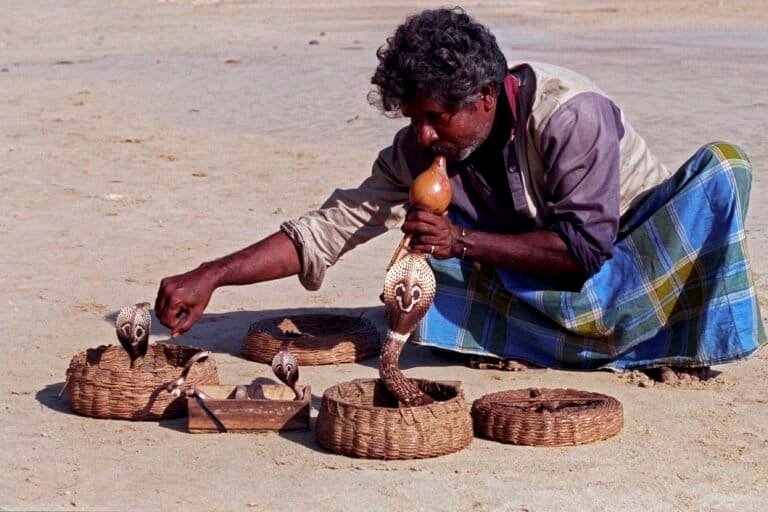
In towns and villages across Sri Lanka, a common sight used to be a man sitting on his haunches playing a flute next to a woven basket, with a cobra raising its hood alongside him. This display seemed almost magical, as the snake appeared to sway to the music, moving its hood as if it were dancing. However, this performance is linked to a community that has its own traditions and a deep connection with snakes, which is now in danger of disappearing. This community, known as the Ahikuntika, is a small nomadic group also called Sri Lankan Telugus or Sri Lanka’s gypsies. Traditionally, they have moved from place to place, with men performing as snake charmers or monkey entertainers, while women often engaged in fortune-telling. Historical records show that these families built temporary homes and traveled between communities to support themselves through their performances and traditional work. Nowadays, snake charming has become uncommon.
Chandrasena Liyanarachchi, a 75-year-old retired teacher, remembered a time when snake charmers were a regular sight, especially around markets. He noted that groups of performers would travel from village to village, announcing their presence by playing a small hand drum. Sri Lankans have a long-standing fear of cobras (Naja naja), but they also place cultural importance on them, often watching these performances with a mix of curiosity and respect. This article was originally published on Mongabay. What are your thoughts on the decline of traditional performances like snake charming?
Sources:
Source: Mongabay Animals, by Dilrukshi Handunnetti