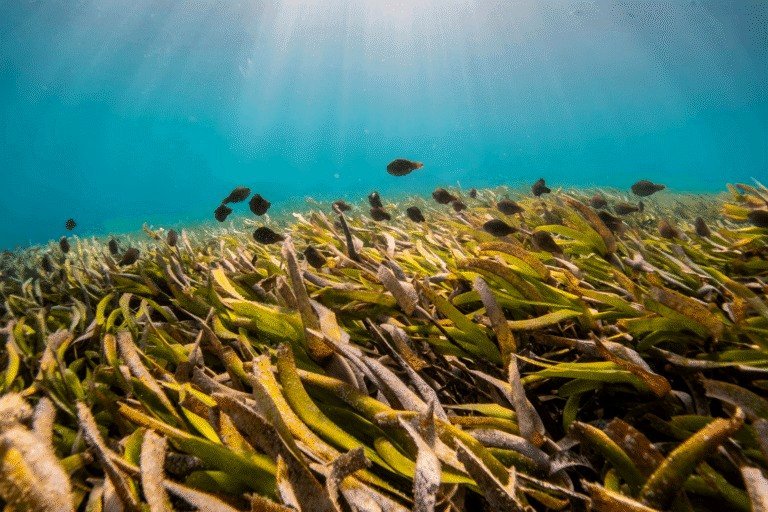
Researchers have looked at 40 locations along the East African coast, from Kenya to Mozambique, to understand seagrass and coral reef systems. Their findings show that seagrasses offer crucial benefits to coastal communities. In a study published in Cell Reports Sustainability, they highlight that while coral reefs have more fish overall, the fish found in seagrass meadows may provide a better range of nutrients for people. These underwater environments are becoming increasingly important, not only as places for fish to grow but also as carbon sinks and barriers against floods and storms. The authors of the study suggest that protecting seagrass meadows is essential not just for saving biodiversity but also for ensuring public health and food security.
Benjamin Jones, who led the research and was a Ph.D. student at Stockholm University during the study, noted that the aim was to look at marine conservation differently rather than just comparing ecosystems. He explained that the value of a marine area is often judged by how many fish it produces. However, for communities that rely on fishing, being able to catch nutritious fish consistently is just as vital as the total number of fish available. According to their analysis, seagrass meadows were found to be “1.6 times more nutritionally multifunctional” than coral reefs. This information was originally published by Mongabay. What do you think about the role of seagrass meadows in supporting coastal communities?
Sources:
Source: Mongabay Animals, by Malavikavyawahare