It doesn’t take much to create an image of a face. Humans have a strong ability to recognize patterns, but this can lead to seeing faces in random objects. A collection of examples shared online shows inanimate items that seem to have human-like features. Readers are encouraged to relax and enjoy the images while sharing their thoughts in the comments.
The phenomenon of seeing faces where none exist is called pareidolia. For example, a wall socket may look surprised, a car can appear grumpy, or two buttons on a coat might seem to chat. Once someone recognizes these features, they cannot unsee them. This occurrence has a practical explanation: it’s safer for humans to quickly identify faces, which is more beneficial than mistakenly thinking a teapot looks like one.
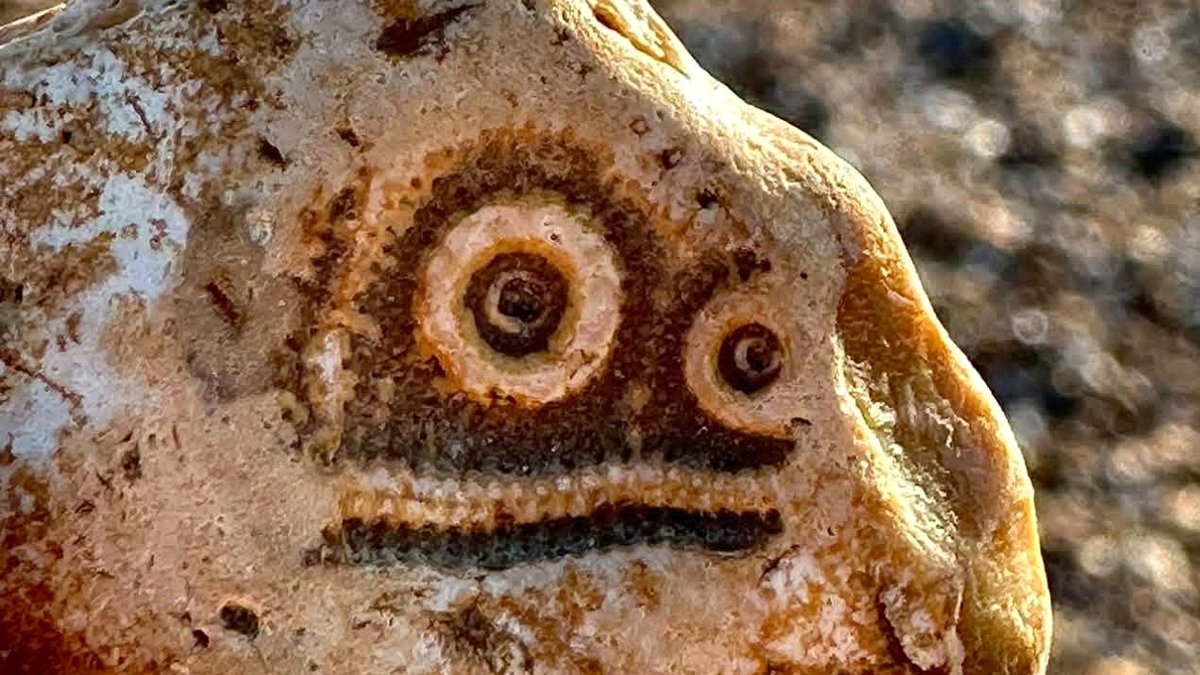
Brain imaging has shown that when people see objects as faces, the same area of the brain responsible for processing actual faces is activated. In a study, this reaction took place just 165 milliseconds after seeing an image. Objects that were not perceived as faces did not trigger the same brain response. The more a non-human object resembles a face, the more active that brain region becomes.
Interestingly, other animals experience pareidolia too. In a 2017 study, researchers found that rhesus monkeys also looked longer at objects that humans identify as faces, focusing on the parts resembling eyes and mouths.
This suggests that pareidolia is not limited to human experience but is something that extends to other primates. It’s amusing to think of a monkey gazing at a coconut, feeling a sense of judgment. Sometimes, the faces seen can be quite large. In 1976, NASA’s Viking 1 orbiter captured an image of a rocky formation in the Cydonia region of Mars that resembled a face looking upward.
The chief scientist for the mission dismissed it as an illusion caused by light and shadows. However, public interest grew, leading to another spacecraft being sent to take clearer photos in 1998. Those images revealed it was just an ordinary hill, which shows how a convincing face can capture people’s attention. Throughout history, space has had numerous formations that resemble familiar shapes, and astronomers have continued this trend since the invention of the telescope.
What unusual objects have you spotted that look like they have faces?
Sources:
Source: Bored Panda, by Eligijus Sinkunas