Rasta Pasta is a dish that combines bold and spicy flavors, making it a favorite for many. This dish, inspired by Jamaican cuisine, features jerk-seasoned chicken, sweet bell peppers, and penne pasta all mixed in a creamy Parmesan sauce. The combination of the peppers and the creaminess of the sauce helps to balance the heat from the jerk seasoning. Plus, everything is cooked in one skillet, which makes for easier cleanup. The dish is colorful, filling, and can be prepared in just 45 minutes. At a cost of only $2.80 per serving, it offers a fun change for pasta nights without breaking the bank.
Rasta Pasta is thought to have started in Negril, Jamaica, back in 1985. Chef Lorraine Washington made homemade fettuccine with tomato sauce and ackee, which is Jamaica’s national fruit, for some construction workers. One of the workers named the dish Rasta Pasta, inspired by the red, gold, and green colors associated with the Rastafari movement. The recipe uses these colors with the three types of bell peppers included.
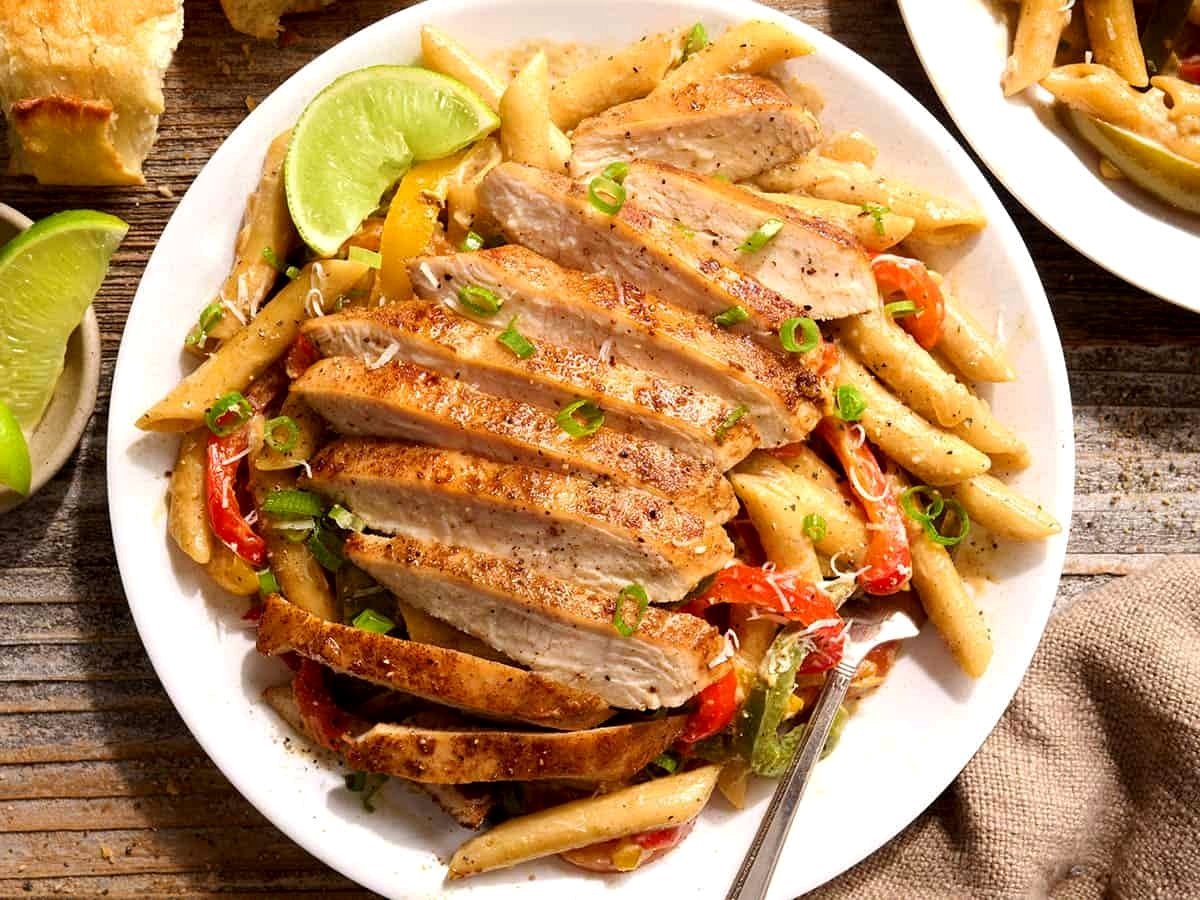
Many variations of Rasta Pasta exist today, but this version features creamy pasta with jerk seasoning. The recipe aims to be simple and budget-friendly. To prepare it, the jerk-seasoned chicken is first seared, followed by the cooking of the colorful peppers in the same skillet to capture all the tasty bits. The penne is cooked directly in chicken broth instead of boiling it separately, allowing it to absorb flavors and thicken the sauce. Half-and-half is used for creaminess without the high cost of heavy cream, and Parmesan is stirred in off the heat to achieve a smooth consistency.
For the best results, the chicken should be cut into thin pieces. Slicing each chicken breast in half horizontally creates thinner cutlets that cook more evenly. Each side should cook for about 3-4 minutes, and it is important to ensure that the thickest part of the chicken reaches 165°F using a meat thermometer. This recipe only requires 1 pound of chicken to serve four people thanks to the plentiful peppers and pasta.
When it comes to jerk seasoning, the amount can be adjusted based on personal spice preferences. Jerk spice blends can differ in heat and salt levels. For a less spicy dish, a mild jerk blend is recommended instead of cutting back on seasoning entirely, as it still provides aromatic flavors from spices like allspice and thyme. The broth and Parmesan also add salt, so tasting the sauce before adding more is important.
The cooking process requires watching the pasta and liquid carefully. Unlike some other one-pot pasta recipes, this one is simmered uncovered to allow some broth to evaporate while the penne releases starch, resulting in a savory, slightly thickened sauce. Keeping the broth at a steady simmer and stirring often is essential. The penne should remain a little firm in the center, absorbing most of the broth. If the pan appears dry before the pasta is done, a little hot broth or water can be added. If it seems too soupy, letting it reduce a bit longer before adding dairy can help.
Finally, when making the creamy sauce, caution is needed. Half-and-half is a more affordable substitute for heavy cream, but its lower fat content can lead to separation if overheated. Once added, the heat should be kept low to thicken the sauce with the pasta. Turning off the heat before mixing in the Parmesan can help avoid clumping. Fresh lime should be kept for serving so everyone can add their preferred amount.
What’s your favorite way to enjoy pasta?
Sources:
Source: Budget Bytes, by Jennie Alley