The search for the rare animal known as the Asian unicorn is facing difficulties, according to the Saola Foundation, which is in charge of the search efforts. The foundation reports that it is urgently trying to gather funds to continue looking for the saola in Laos. Lorraine Scotson, the CEO of the Saola Foundation for the Conservation of the Annamite Mountains, mentioned that the team usually leaves the forest in July for the rainy season. This year, reduced funding made it uncertain if they could return in October. Funding for that month has recently been secured, mainly through donations from several zoos, but the search for additional funds is ongoing.
The saola (Pseudoryx nghetinhensis) is considered by many to be the most endangered large animal on the planet. It is the only species in its genus and is a tropical bovid that looks somewhat like an antelope, featuring long curved horns, a narrow face, and distinctive facial markings. This species has reportedly remained largely unchanged for around 15 million years. It is found in the Annamite Mountains, a region rich in biodiversity that crosses the borders of Laos, Vietnam, and a small part of Cambodia. Scientists only identified the saola in 1992.
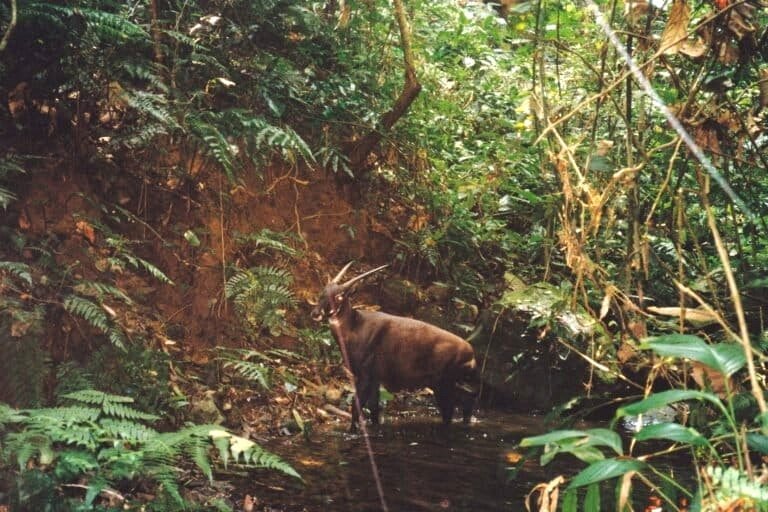
Scotson noted that it is believed that fewer than 50 saola remain in the wild, with none currently in captivity. The last confirmed sighting was a camera trap photo taken in 2013, and very few people have seen one in person. Given these circumstances, the Saola Foundation initiated a search for this elusive creature. This article was originally published on Mongabay.
What do you think can be done to help in the search for the saola?
Sources:
Source: Mongabay Animals, by Isabel Esterman