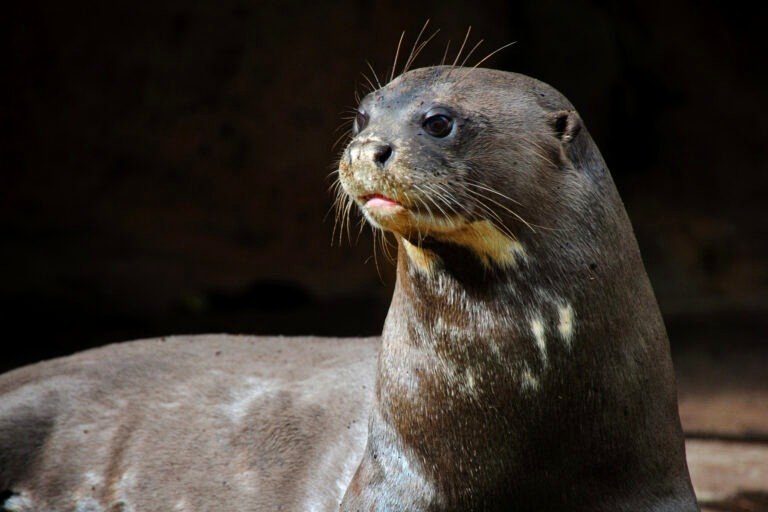
On a warm morning near the Içana River in Brazil’s upper Rio Negro Basin, researchers saw a group of Baniwa men checking their fishing traps in the shallow waters. Further down the riverbank, a group of giant otters (Pteronura brasiliensis) was searching for food. The otters appeared and disappeared in the water, resembling a game of Whack-A-Mole. One otter emerged, holding a striped fish with its paws, then climbed onto the bank to eat. The sounds of its meal were loud across the water, with sharp cracking as it chewed through bones and wet sounds as it tore into flesh and scales. The area where the otters fed was filled with fish bones and had a strong smell. Jansen Zuanon, an ecologist and fish expert who worked on a study about Baniwa people and otters published in 2026, noted that the otters are hard to miss. Typically, giant otters live in family groups of nine to twelve. The Içana River connects to the Rio Negro, which is a key tributary of the Amazon, known for its dark, tea-colored water. Although the rivers and tributaries support various fish species, they are not particularly plentiful. For the Indigenous Baniwa people living along the banks of the Içana in northwestern Brazil, fishing is a vital source of protein. This article was originally published on Mongabay. What are your thoughts on the relationship between people and wildlife in this region?
Sources:
Source: Mongabay Animals, by Latoya Abulu