Astronauts describe a unique sensation when they first see Earth from space, known as the overview effect. This term, created by Frank White in 1987, captures the sudden feeling of wonder at how fragile and interconnected our planet appears from above. From the sky, there are no visible borders, just flowing clouds, shimmering oceans, and vibrant landscapes that are often unnoticed from the ground. While most people will never experience this view firsthand, satellites orbiting Earth provide glimpses of it. The Instagram account Galaxies showcases these stunning views, resembling a gallery of Earth’s remarkable features.
For instance, there is a desert in Africa that looks like a giant eye and a volcano in New Zealand surrounded by a perfectly circular forest. Additionally, a Pacific island is shaped like a heart, while a lake in Nevada appears to swirl like spilled paint. Some images seem so otherworldly that they could be mistaken for scenes from another planet. The account also includes intriguing stories, from ancient pyramids to Ice Age lakes and active volcanoes that continue to alter the landscape.
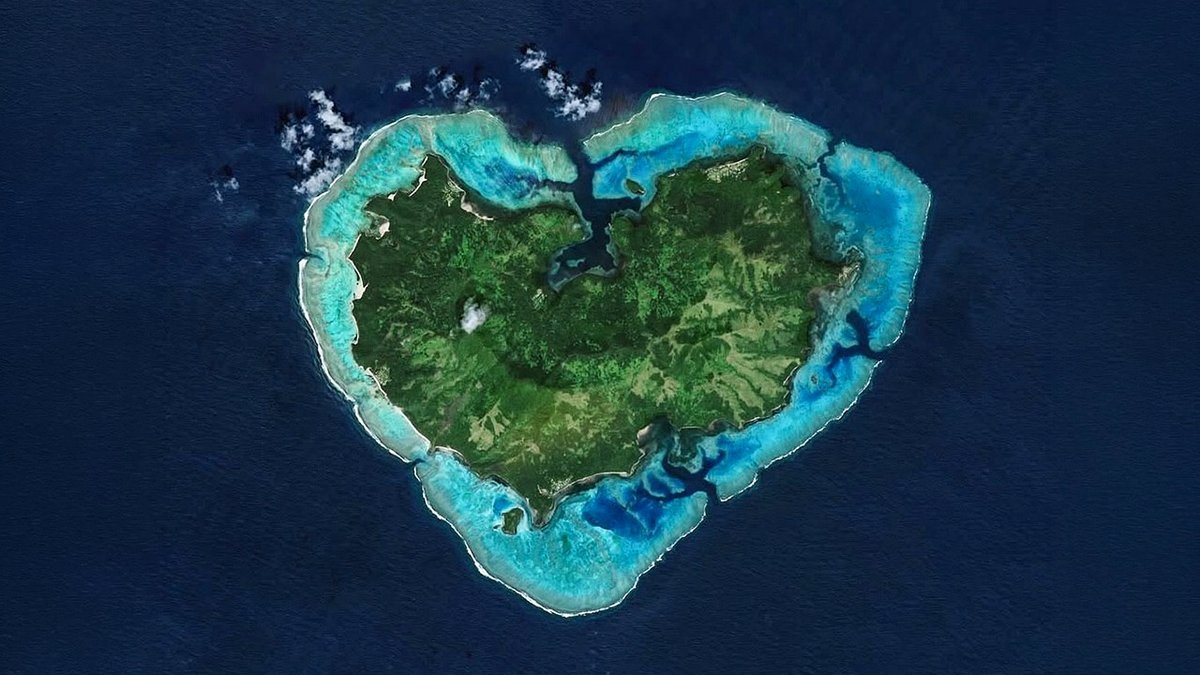
One highlighted image is of Matuku Island in Fiji, which is heart-shaped and located in the Lau archipelago, surrounded by a turquoise coral reef. The island spans around 22 square miles (57 km²), reaches a height of 1,263 feet (385 m), and is inhabited by approximately 500 residents living in coastal villages. The indentation at the top of the heart shape is a remnant of an ancient volcano, now forming a sheltered bay accessible to boats through a gap in the reef. The islanders have designated traditional fishing restrictions, called “tabu” zones, to help maintain the health of their reef.
Another fascinating scene shows an underwater volcano in the Bismarck Sea near Papua New Guinea. On May 8, 2026, small earthquakes indicated that a hidden volcano was becoming active. Within just a day, satellites detected steam plumes rising nearly 2 miles (3 km) above the ocean, roughly 80 miles (125 km) southeast of Manus Island. Scientists suspect the eruption originates from an area called Titan Ridge, as named by locals. A Landsat 8 image from June 4 shows steam and discolored water around the vent. The newly erupted pumice, still warm enough to be visible in infrared images, floated nearby. This pumice traveled for miles and created significant piles on nearby islands, obstructing boat access and affecting local resources. As of summer 2026, scientists continued to monitor the situation, hoping to see if a new island would form, though none had been confirmed yet.
Another image features the Hara Forest in Iran, a large mangrove ecosystem situated between Qeshm Island and the Iranian mainland in the Persian Gulf. This forest is primarily made up of grey mangroves, known scientifically as Avicennia marina, which can thrive in salty water by filtering out excess salt through their leaves. The region has been protected since 1972 and is a habitat for various birds, including flamingos, pelicans, and herons, and is a feeding ground for green sea turtles.
Lastly, there is the Nishinoshima Volcano, located about 620 miles (1,000 km) south of Tokyo. This volcanic island has been growing, especially since the 1970s when only a small part of it was above the water. A series of eruptions, particularly one starting in 2013, resulted in enough lava flow that by 2021, the island expanded to roughly 1.4 miles (2.3 km) wide. The yellow and green patterns surrounding it are caused by seawater colored by volcanic minerals, gases, and sediment stirred from the ocean floor.
What image or story surprised you the most?
Sources:
Source: Bored Panda, by Eglė Tenikytė