Many people enjoy taking photos in front of mirrors. As teenagers, many of us likely took mirror selfies, which help us capture our full bodies when friends aren’t around. However, these mirror images often reveal more than just our appearance. They can turn into versions of “Where’s Waldo?” as unexpected things may be happening in the background that we don’t notice initially. Bored Panda has gathered some funny examples of mirror reflections, showcasing unusual perspectives, surprising truths, and perfect timing by the photographers.
One image shows a person posing like a teapot. Another photo raises a playful question about the color of mirrors. Do they have no color, or do they reflect all the colors they see? Understanding color involves knowing that it comes from reflected light. An object appears blue because it absorbs all other colors and reflects blue light. Black materials reflect no light, while white ones reflect all colors. Ideally, a perfect mirror should reflect all colors and thus be white. However, mirrors aren’t perfect; they actually reflect a bit of green light due to an underlayer of silica glass that enhances green wavelengths. This may be something to consider next time you look into a mirror.
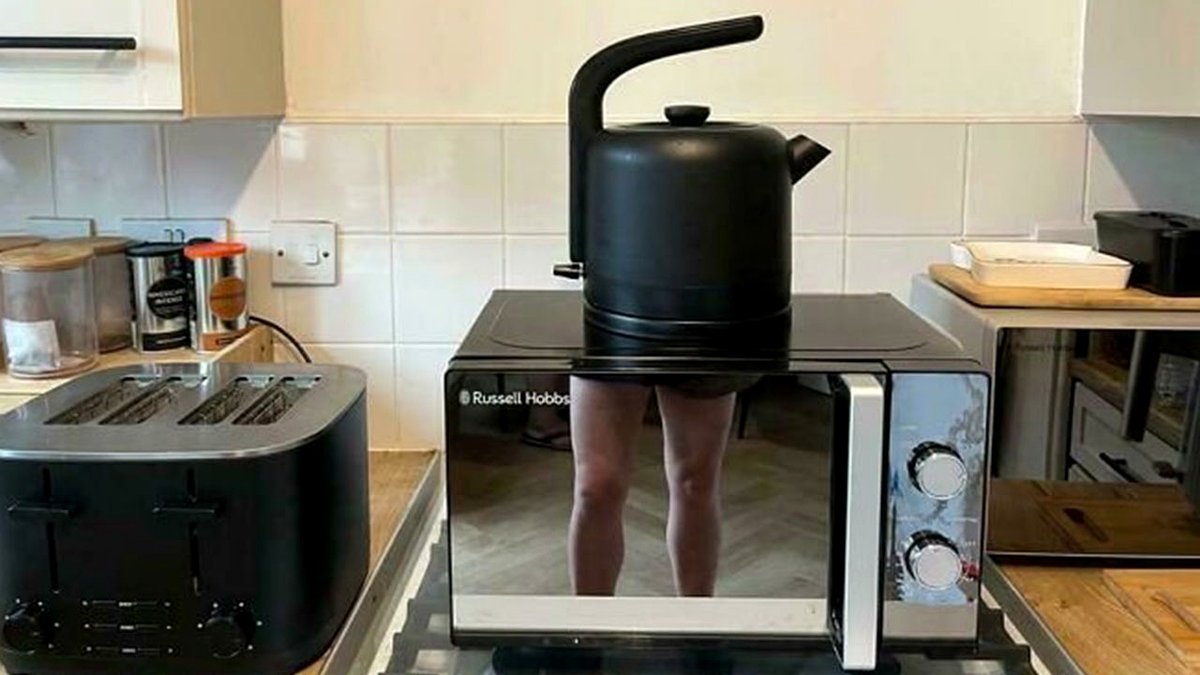
Another amusing picture shows a window reflection that transforms a person’s mother into a creature with a pot-plant head. While mirrors can reflect our image, they can sometimes show frightening sights too. Vision scientist Giovanni B. Caputo from the University of Urbino in Italy explored this idea with an experiment involving 50 participants. They were asked to observe their reflections for ten minutes. Afterward, many reported seeing odd things, like their faces distorting or seeing the faces of their parents, animals, or even figures typically found in horror movies.
This phenomenon can be explained by the way our eyes perceive things. For instance, there’s something called the Troxler effect, which occurs when we gaze at something for a long time, causing our peripheral vision to fade. This type of visual trickery is common online. Caputo’s findings might relate to this effect.
The science behind our experience with mirrors includes neural adaptation, meaning that when we focus on the same image for too long, our neurons stop processing the information as strongly. When something in our view changes, our neurons react again. That’s why shifting our gaze or having something move can break the illusion.
One more humorous photo shows a reflection of a chimpanzee that seems to don a dress. Interestingly, there’s a popular belief about what one wouldn’t see in a mirror, even with a long stare: a vampire! This idea suggests that while they might appear in modern mirrors, older ones containing silver would not show them, as silver is thought to repel supernatural beings such as vampires.
What do you think about the nature of mirror reflections?
Sources:
Source: Bored Panda, by Monika Pašukonytė