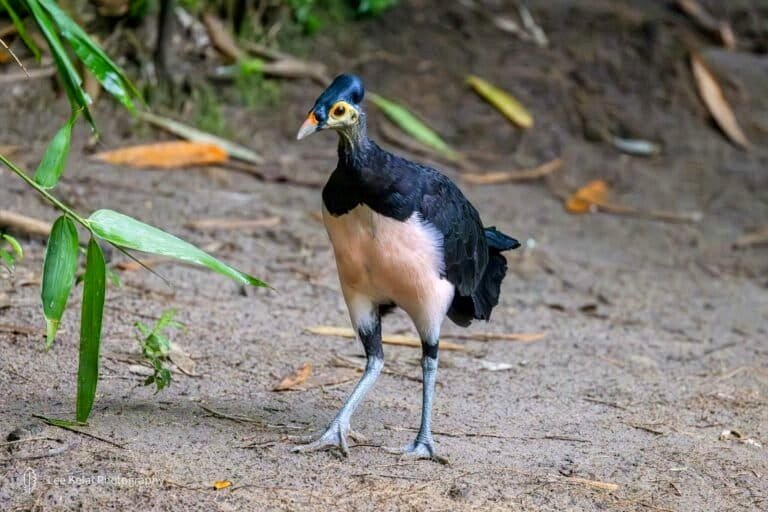
Maleo birds, which are black and white and about 60 centimeters (2 feet) tall with colorful faces featuring blue, orange, and yellow, inhabit the dense tropical forests of Sulawesi. When it’s time for nesting, they gather at specific sites—sandy beaches that are warmed by sunlight or geothermal heat. There, they use their webbed blue feet to create burrows, lay their eggs, and then leave the area. After a couple of months, the chicks hatch and, remarkably, are able to fly within hours. The maleo is an important bird in Sulawesi, representing the Central Sulawesi province and Bogani Nani Wartabone National Park. However, maleos (Macrocephalon maleo) are now critically endangered, with their population estimated at only 4,000 to 7,000 breeding pairs. This decline is due to habitat loss and poaching. Since 1983, over two-thirds of their 149 nesting sites have been lost because of urban and commercial development taking over riverbanks and beaches, as well as destruction from mining and road construction. The eggs of maleos are seen as a luxury food, leading to nest raiding and fewer chicks to help their population grow. Recently, a study in the Journal of Asian Ornithology highlighted a new threat: the illegal trade of live maleos for the exotic pet market. Researchers noted three seizures related to this trade. This article was originally published on Mongabay. What do you think can be done to protect these birds?
Sources:
Source: Mongabay Animals, by Sharon Guynup