In Khon Kaen, Thailand, a wildlife officer gently holds a leopard cat cub, which is small enough for her fingers to grasp around its body. She is feeding it formula milk using a syringe. This cub is among the many rescued at the Department of National Parks and Wildlife’s center in northeastern Thailand, where they care for injured and lost leopard cat cubs, preparing them for life in the wild. Behind her, 15 older leopard cats, previously rescued as cubs a few months ago, roam in their cages. These cats resemble domestic cats but are more slender and have distinct markings on their fur. Unlike domestic cats, they show their teeth and growl when people pass by.
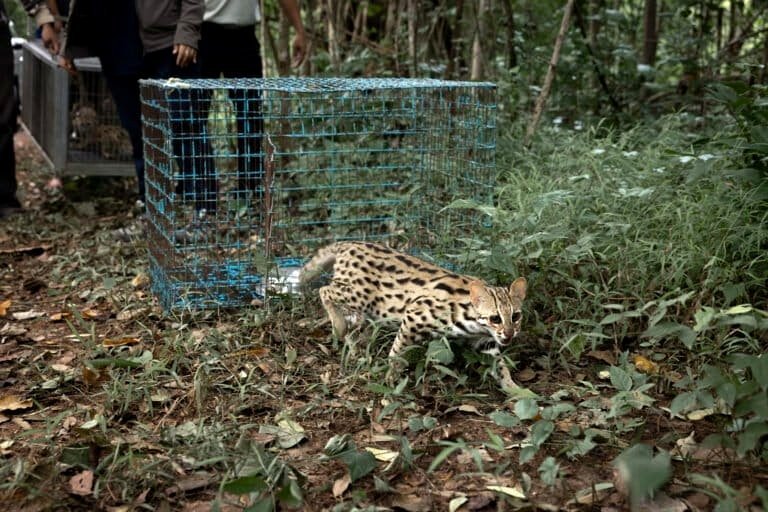
On that day, nine of the cats, aged 8 to 9 months, are set to be released into the forest. The other six, who are younger, will be moved to the center’s specialized behavioral rehabilitation pens. There, they will spend the next two months improving their climbing and hunting skills to prepare for survival in the wild. Leopard cats are small wild felines found throughout much of Asia. The International Union for Conservation of Nature (IUCN) categorizes them as least concern, but experts warn that their populations are becoming increasingly threatened by hunting and habitat destruction. These adaptable cats often live near farms and villages and are commonly seen in northeastern Thailand. Female leopard cats frequently raise their young in sugarcane fields, where the tall leaves provide shade from the sun.
What are your thoughts on the efforts to rehabilitate leopard cats?
Sources:
Source: Mongabay Animals, by Isabel Esterman