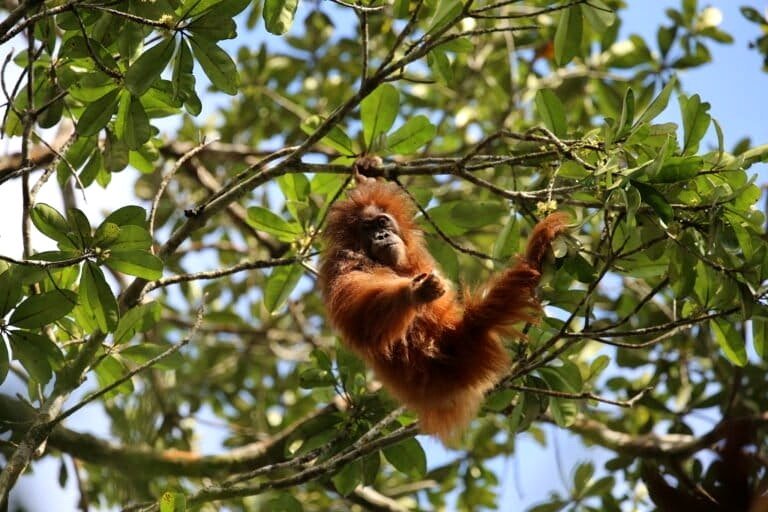
JAKARTA — Almost a year after scientists noted a major ecological crisis for the critically endangered Tapanuli orangutan, there is still no unified recovery plan for this rare species. As mining activities restart and new development proposals are considered, concerns grow, especially with a strong El Niño bringing additional threats. Recent satellite images have shown new ground disruptions in the area of Indonesia’s Martabe gold mine, which is located within the orangutan’s habitat.
The disturbances were seen as large areas of land without trees and altered soil between June 13 and June 23 on steep hills near the Ramba Joring pit in Batang Toru, North Sumatra province, based on Planet satellite images examined by Mongabay. This region is home to the largest known population of Tapanuli orangutans. Researchers estimate that only 716 of these orangutans exist in Batang Toru, divided into three separate groups, which puts the species at risk for further decline.
Mighty Earth, an environmental group based in the U.S., describes the changes as landslides linked to mining activities. However, Agincourt Resources, the company that runs the Martabe mine, disagrees with this view. They state that the disruptions in June were caused by soil movement following blasting that was conducted within their designated operational zone. They also noted that the blasting was planned with care.
What do you think about the situation facing the Tapanuli orangutans?
Sources:
Source: Mongabay Animals, by Isabel Esterman