On a secluded beach on Groote Eylandt, an island in Australia’s Gulf of Carpentaria, Kirsten Eden and her team discovered a fishing net that had been tampered with. The net was burned and melted into a lump while it was at sea before being tossed overboard. Instead of sinking, it floated to the shore, turning into a hard plastic mass. This net, which was likely once about 60 meters (around 197 feet) long, is now breaking down into microplastics that can last in the environment for a very long time.
Eden, who leads the Anindilyakwa Land and Sea rangers, explained to Mongabay that the whole of Groote Eylandt is Aboriginal freehold land, meaning it is recognized as belonging to Indigenous Australians. She emphasized the cultural importance of these beaches, noting that they hold significant meaning, including songlines and art sites. This motivates the team to clean up and remove debris, which they find unsightly.
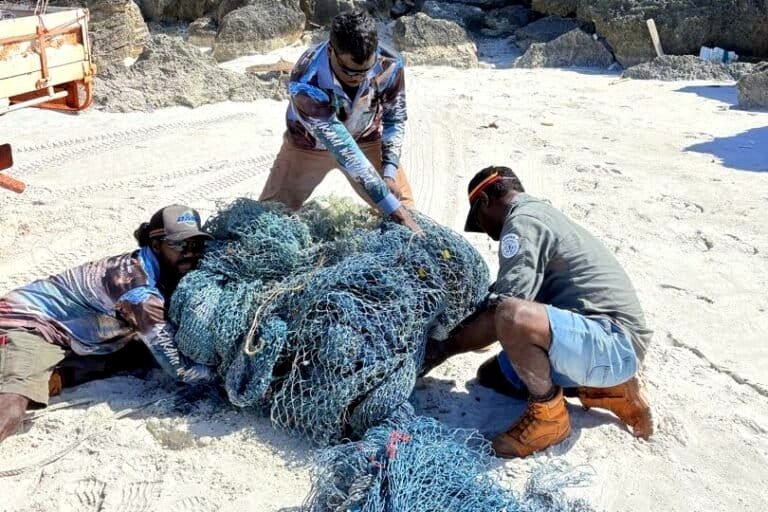
In addition to general cleanup efforts, the rangers are specifically focused on ghost nets—fishing nets that have been abandoned and now drift in the ocean. These nets can trap sea creatures and collect trash as they float. Indigenous rangers in northern Australia work to retrieve these lost fishing nets, which continue to pose a threat to marine life long after they are discarded.
Removing a ghost net from a beach is labor-intensive. Some of these nets have been left for years, often buried deeply or tangled in driftwood and rocks. Getting just one net off the beach can take several hours. This article was originally published on Mongabay.
What do you think about the efforts to clean up ghost nets and protect marine life?
Sources:
Source: Mongabay Animals, by Mongabay Animals