Africa is known for its rich wildlife, and its fossil sites provide evidence of how ancient animals developed and adapted to various environments. A new discovery in Zimbabwe has added an exciting chapter to this history. Scientists have found a new dinosaur species named Musango matusadonaensis, which lived about 210 million years ago during the Late Triassic period. This find suggests that the prehistoric wildlife of Zimbabwe was even more unique than previously thought. It appears that some dinosaurs in Zimbabwe were different from those in nearby South Africa.
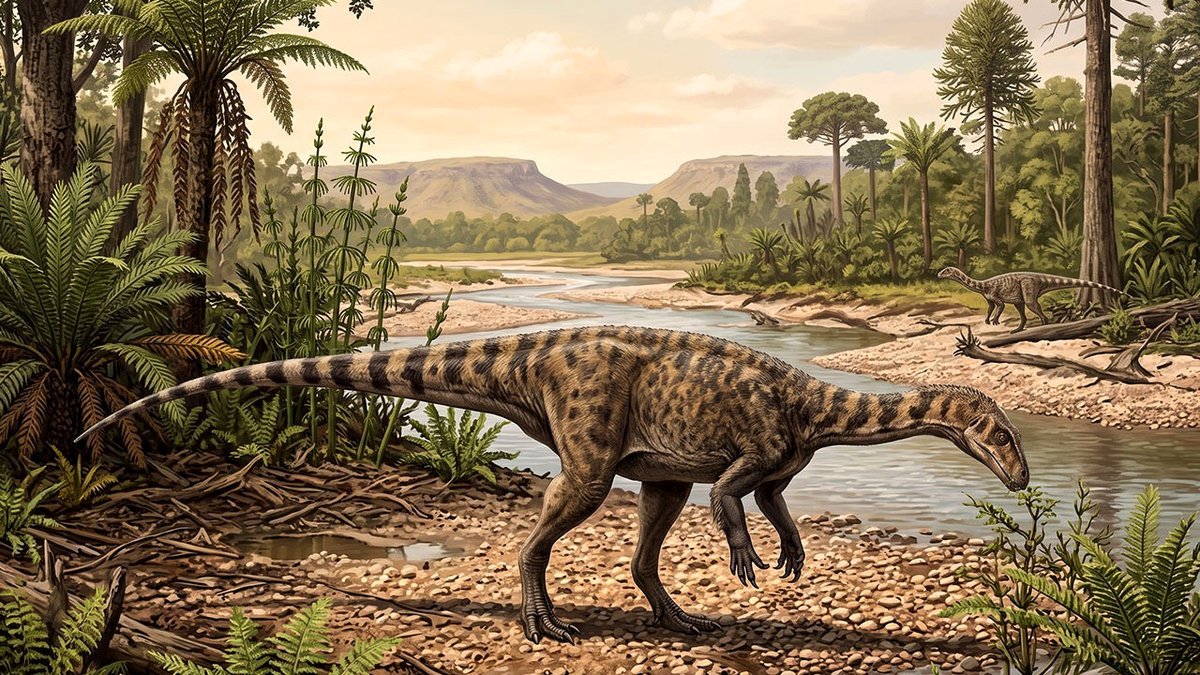
Musango belonged to the group of dinosaurs called sauropodomorphs, which eventually evolved into large long-necked dinosaurs like Diplodocus. Unlike them, Musango walked on two legs. From the partial skeleton found, researchers believe it was around 4.5 meters (15 feet) long and weighed approximately 220 kilograms (485 pounds). Growth rings in its bones indicate that it was not fully grown when it died. Its skull has not been found, so its diet remains unknown, but many of its relatives were known to eat plants.
Reports of dinosaur bones in Zimbabwe date back to 1916, but early discoveries did not attract much scientific attention. Interest grew in the 1970s when Zimbabwean paleontologists Geoffrey Bond and Michael Raath discovered significant fossil sites in the southwest region and the lower Zambezi Valley. Many fossils from that time were linked to species recognized from South Africa. Years later, Steve Edwards, a safari camp manager, uncovered new fossil sites along Lake Kariba, which forms part of the border with Zambia. His findings reached Jonah Choiniere, a dinosaur expert at the University of the Witwatersrand in Johannesburg, who organized an international team to investigate.
Reaching these fossil sites proved challenging since they are located deep within Matusadona National Park. During field trips in 2017 and 2018, the researchers used a houseboat on Lake Kariba as their base. They collected fossils from ancient mudstones and sandstones and have been cleaning and examining these specimens since then.
The geological evidence and fossilized plants suggest that the area where Musango lived was mostly dry, dotted with large conifer trees. Permanent rivers created green areas, providing habitats for various animals of that era. Fossils of lungfish and phytosaurs, which resembled crocodiles, were also found in the same deposits. The team initially expected to find dinosaurs similar to those in South Africa given the proximity and age similarity of the fossil beds. However, the fossils around Lake Kariba turned out to be completely different species.
Musango is not the only dinosaur discovered in these sites. In 2024, researchers introduced another sauropodomorph named Musankwa sanyatiensis from the same deposits. Together, these two dinosaurs indicate that Zimbabwe had its own distinct dinosaur community, separate from the species found further south. What do you think about these discoveries in Zimbabwe?
Sources:
Source: Bored Panda, by Aleksandra