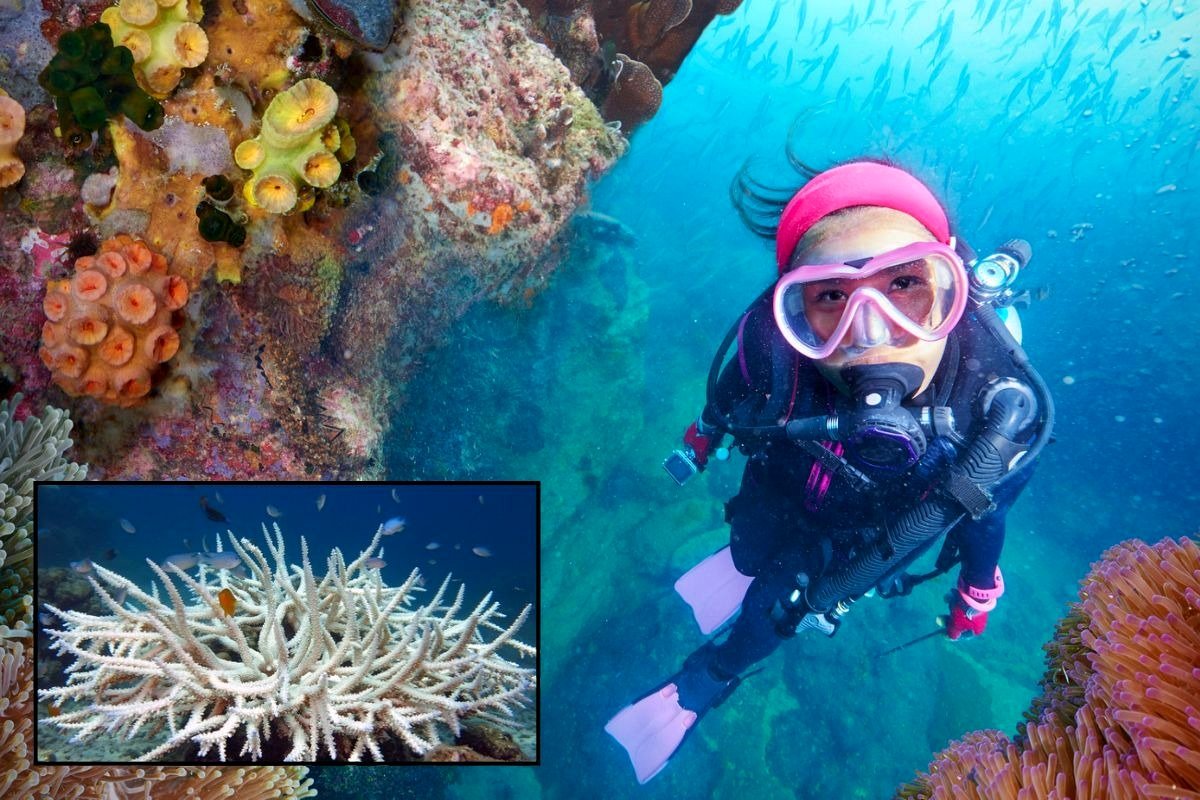
The oceans face serious challenges. Climate change is causing higher temperatures, which leads to rising sea levels and increased stress on coral reefs. When the water gets too warm, healthy corals expel the beneficial algae that live within them. This process causes the coral to lose its color, become weak, and be more susceptible to diseases. The term “bleached coral” refers to this dying coral. The decline of coral and coral reefs has a negative impact on many marine species and humans as well. Therefore, scientists are eager to find ways to prevent or reverse coral bleaching. A recent discovery occurred by chance in a lab.
Steve Palumbi, a marine sciences professor at Stanford, focuses on coral in his research. While working in his lab, he noticed something unusual. He had gathered samples from the same coral colony when two samples accidentally touched in their tank. One sample was bleached, while the other was healthy. Surprisingly, when Palumbi examined them later, he saw that color had started to return to the bleached coral at the area where they made contact. Stanford marine scientist Danny Collins shared that he was amazed to see the healthy coral’s color slowly spreading into the bleached coral. The bleaching appeared to reverse itself.
The researchers were fascinated by their observation. After further investigation, they found that the healthy coral could transfer some of its algae to the bleached coral through physical contact. Tests showed that prolonged contact with healthy coral could help the bleached coral recover significantly. Crucially, the pieces of coral had to be in direct contact for this to happen; even a small distance prevented the recovery process. They observed the two corals merging to create a “nutrient bridge” that allowed the algae to move across. Remarkably, just one week of contact was enough for the bleached coral to gather enough algae to completely recover in about seven weeks. This process can be likened to a life-saving hug.
In natural settings, bleached coral can recover if the environmental conditions, like ocean temperatures, improve. However, this recovery usually takes a long time, often several months, during which many corals that are severely bleached unfortunately die. The significant findings from this study were published in Science Advances. The researchers have informally named this method “helping hands.”
While the results in the lab were impressive, the Stanford researchers are unsure if the same effect will occur in the wild. Even if it can be replicated, the process is expected to be slow and require much effort, meaning “helping hands” alone won’t be enough to save the oceans. This technique may help in emergencies to protect critically endangered reefs, but more extensive efforts will be necessary to restore the global coral reef ecosystem. Unless ocean warming is halted or reversed, coral bleaching is likely to continue and worsen. Nevertheless, scientists, including the Stanford team, are continually making exciting discoveries that may help improve the situation. What do you think about these findings?
Sources:
Source: Upworthy, by Evan Porter