The mullein plant, often ignored by many people, is full of beneficial qualities. Its scientific name is Verbascum thapsus, and it commonly grows along roadsides and in open fields. Despite how ordinary it looks, mullein has a long history of use in traditional medicine thanks to its many health advantages. This tall plant, with fuzzy leaves and bright yellow flowers, can easily be missed by those who don’t recognize its value. Mullein should not be dismissed as just a weed; it holds many natural remedies waiting to be found.
Mullein has a rich background filled with folklore and traditional uses. In ancient times, people believed it could protect against evil spirits and often used it in ceremonies. The Greeks and Romans valued mullein for its healing properties, especially for treating breathing issues. In the Middle Ages, it was called ‘Hag’s Taper’ because it was used as a wick for candles. Native Americans also acknowledged its healing abilities, using it to help with coughs, colds, and skin problems. This history shows that mullein has long been regarded as important in herbal medicine.
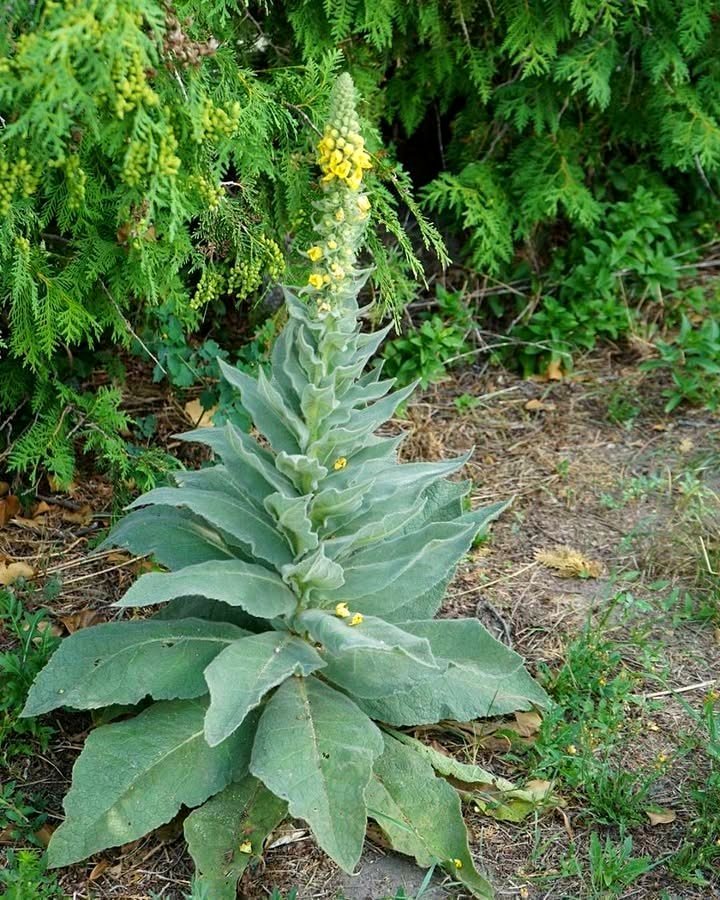
Recognizing the mullein plant is quite simple because of its unique characteristics. It usually grows to a height of 2 to 6 feet and has a single stalk that does not branch. The large, soft leaves are arranged in a rosette at the base, while the top features a dense spike of small yellow flowers. The fuzzy texture of the leaves helps the plant retain moisture. Once you know what to look for, spotting mullein becomes easy.
Mullein can grow in many different places, making it adaptable. It thrives in sandy, well-drained soil and is often seen in disturbed areas like roadsides, fields, and meadows. As a biennial plant, it completes its life cycle over two years. In the first year, it develops a rosette of leaves, and in the following year, it produces a flowering stalk. Mullein is tough and can survive in drought conditions and poor soil, where other plants might not grow well.
Mullein has many health benefits, making it a great addition to any natural medicine collection. Here are the top 10 advantages of this amazing plant. What do you think about the uses of mullein?
Sources:
Source: Kitchen, by recipes