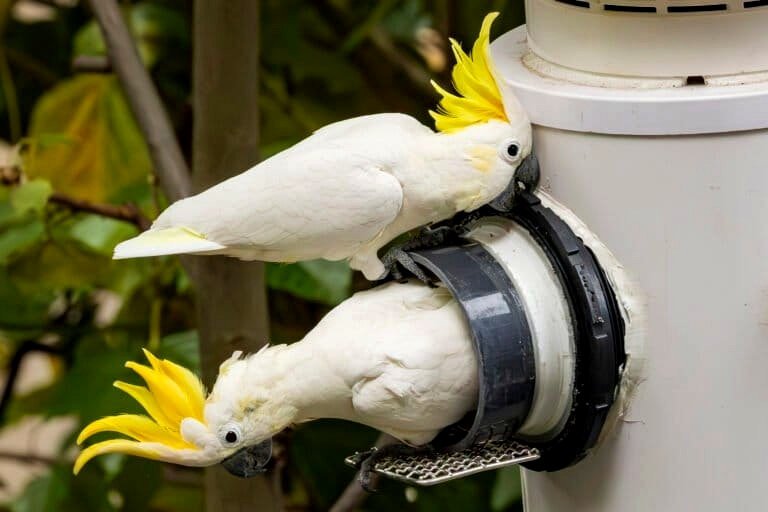
HONG KONG — On a warm September day, two secondary school boys at St. Louis School watched as conservationist Harry Wong skillfully climbed a tall candlenut tree (Aleurites moluccanus) in downtown Hong Kong. He was installing a nest box for yellow-crested cockatoos (Cacatua sulphurea). Using safety gear, Wong quickly set up the box and then descended the tree. Wong, along with biologist Astrid Andersson from the University of Hong Kong (HKU), leads HK Cockatoo Watch, a project aimed at conserving the city’s wild yellow-crested cockatoo population.
Yellow-crested cockatoos are critically endangered, with fewer than 2,000 in their native areas of eastern Indonesia and Timor-Leste. Surprisingly, Hong Kong has the largest wild population of these birds outside their native countries, with about 200 cockatoos living in the city. This number represents roughly 10% of the global wild population and is believed to come from pets that were released or escaped. The population remains steady due to the absence of natural predators and strong legal protections. A recent DNA study by Andersson and her team revealed that Hong Kong’s feral cockatoos have a surprisingly high level of genetic diversity.
This article was originally published on Mongabay. What do you think about the conservation efforts for these unique birds?
Sources:
Source: Mongabay Animals, by Philip Jacobson