A story from KUOW, the Seattle chapter of National Public Radio, shares a touching tale about kindness, represented by an origami crane. This story centers on a young girl named Rika Matsuda, who was just seven years old and excited about her new bicycle in Japan. While riding in the park, she faced a problem when her bike’s brakes failed, causing her to crash into a wall. This accident hurt her foot, which soon began to bruise.
A tall man in a suit observed the incident and approached her. Matsuda felt nervous and uncertain about trusting him because he seemed important. However, she remembered feeling reassured when he asked if she was okay in a gentle voice. The man helped her up, took her to a water fountain to clean her injury, and lent her his phone so she could contact her grandfather. While waiting for her grandfather to arrive, he showed her how to fold an origami crane from a piece of white paper. Matsuda recalled that he was skilled at this craft and taught her how to make a nice crane. She thought he might have wanted her to focus on the folding rather than her injury.
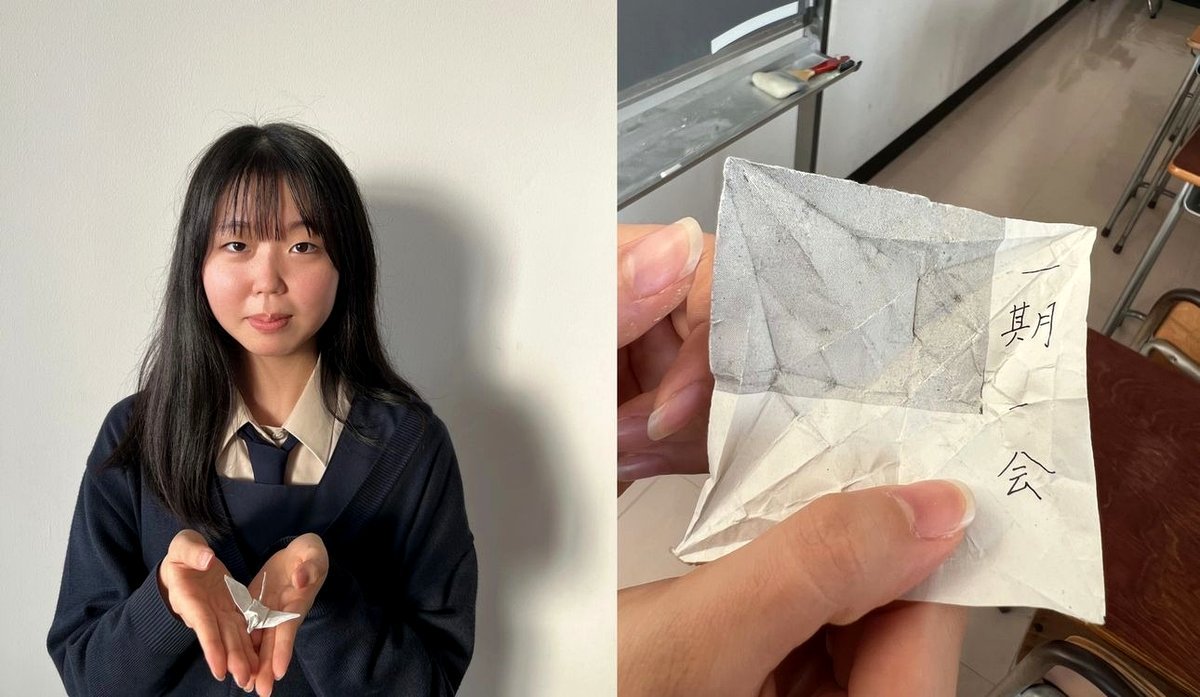
When her grandfather finally came, the man helped her retrieve her damaged bicycle and get home. Before leaving, he gave her the origami crane without saying anything and then walked away, becoming just a memory for Matsuda. She kept the crane on her desk for years, often recalling the man’s kindness whenever she saw it.
Fast forward ten years, Matsuda found herself in high school, where her English teacher, Benjamin Johnson, used NPR’s “My Unsung Hero” series to inspire students. He asked the class to write about a time they encountered a Good Samaritan. This prompted Matsuda to think about the origami crane. Though time had blurred her memories, she vividly remembered the kind man and his gift.
After school, she hurried home, eager to unfold the crane and see if he had left a message. Carefully opening the paper, she discovered a hidden message that contained two characters, which formed a well-known Japanese saying. She translated it, explaining that it means to value the moments we share with others because they might not happen again. Matsuda realized even more how kind the man had been, recognizing him as a true unsung hero.
What do you think about Matsuda’s story and the hidden message she found?
Sources:
Source: Good News Network, by Andy Corbley