In the forests of southwest China, researchers have found a large fungus that changes what we know about how big fungi can grow. This newly identified species, called Dianjunus rex, or “King of Dian,” is named after an ancient Chinese kingdom. The fungus can grow fruiting bodies that reach up to 20 inches tall and weigh as much as 5 pounds. Scientists from China, Thailand, and Mexico were involved in this discovery, which not only introduced a new genus but also an entirely new family of fungi within the Ascomycota phylum. Studies of its genome suggest that this new family emerged around 65 million years ago, shortly after the mass extinction event that wiped out the dinosaurs. This time was likely when new roles became available for fungi that help break down wood, a role that “D. rex” still occupies today. Dr. Indunil C. Senanayake, an associate professor at the Germplasm Bank of Wild Species at the Kunming Institute of Botany in China, noted that the discovery opens a window into the evolution of unique fungal forms.
During their research in Yunnan, scientists collected large, whitish fruiting bodies, known as stromata, from the roots of Chinese cork oak trees. Ascomycota is the largest group of fungi, containing over 64,000 species. Unlike typical mushrooms, these fungi release spores from tiny, sack-like structures. While many people might not recognize specific Ascomycetes by name, they are among the most significant organisms on Earth, along with humans. This group includes various molds and yeasts used in making bread, beer, wine, and cheeses like Stilton and Brie, as well as important medicines like penicillin. On the other hand, some Ascomycetes are responsible for serious diseases, including Dutch elm disease and various fungal infections in humans. Among all these fungi, D. rex stands out as the largest.
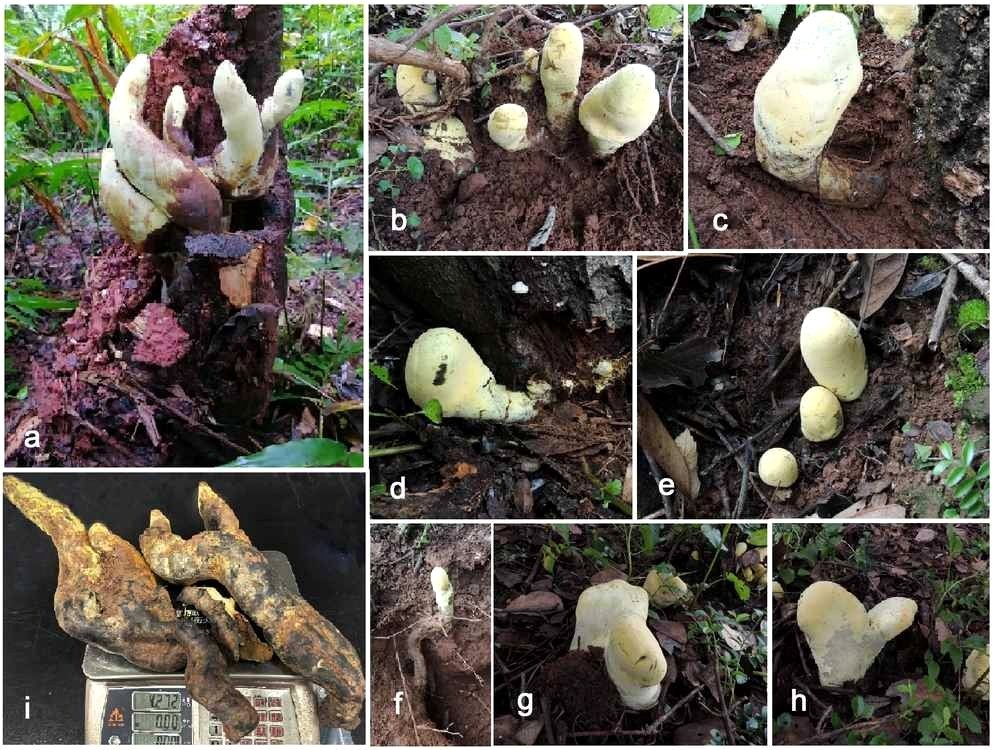
The research team grew the spores they collected to study the fungus’s appearance and sequenced its genome. Their genetic findings, along with careful morphological studies, placed the Dianjunaceae family within the Xylariales order. They found that D. rex is most closely related to Graphostroma platystoma, which thrives on dead hardwood across the Northern Hemisphere and belongs to the Graphostromataceae family. By analyzing the species’ DNA, the researchers estimated that the Dianjunaceae family formed about 65 million years ago, just one million years after the Cretaceous-Paleogene mass extinction, which famously eradicated the dinosaurs and many other living things. Senanayake pointed out that this timing is intriguing. After the mass extinction, forests underwent significant changes, leading to a large amount of dead plant material becoming available, which may have created new opportunities for fungi that decompose wood.
Despite its large size, the reason why D. rex has grown so big remains unclear. Previously, the largest ascomycete fruiting bodies measured between 20 to 30 centimeters, which is about half the height of D. rex. Senanayake speculated that a tall fruiting body could help disperse spores more effectively by wind in dense forests. However, this considerable size requires a lot of energy, suggesting that such a trait likely developed only where the benefits outweighed the costs.
While some species, like sharks and sea turtles, have remained relatively unchanged for millions of years, certain plants, including the ginkgo biloba and the “dinosaur evergreen” of Australia, have survived since the time of the dinosaurs. Researchers believe there are more fungi waiting to be discovered in subtropical China. Senanayake highlighted that this area has a unique mix of habitats, stable climate, and complex interactions that help fungi diversify. However, the diversity of fungi in these ecosystems has often been overlooked due to challenges in studying them, including their seasonal growth patterns and a focus on economically valuable fungi. What do you think about this discovery?
Sources:
Source: Good News Network, by Andy Corbley