The universe, estimated to be around 13.8 billion years old, is full of mysteries. In the past, people used myths to understand the world around them. However, through mathematics and advanced scientific tools, our knowledge of the universe has greatly expanded. Yet, according to NASA, much of the universe remains a mystery, and we have only just begun to understand it.
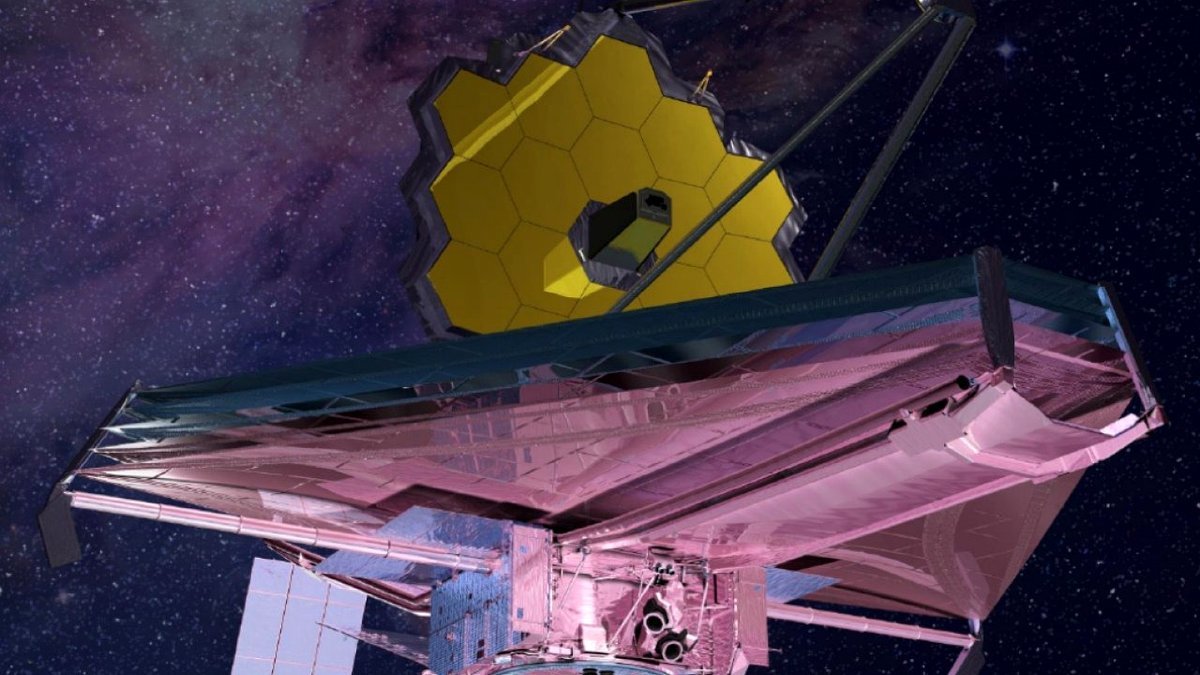
A researcher named Lior Shamir, who works at Kansas State University, recently analyzed data from the James Webb Space Telescope (JWST) and found an intriguing pattern in the rotation of distant galaxies. This could bring new insights into whether our universe might exist inside a black hole. NASA launched the JWST on December 25, 2021, to enhance our ability to observe the distant cosmos. Unlike the Hubble Space Telescope, which orbits Earth, JWST is positioned about 1 million miles from Earth and uses infrared technology to explore some of the earliest galaxies and their development.
Shamir reviewed observations from the JWST Advanced Deep Extragalactic Survey (JADES), which focuses on distant galaxies and the early universe. In his analysis, he looked at 263 galaxies and noticed something unusual regarding their rotation. According to his report, he found that there was a significant difference in the number of galaxies rotating in the same direction as the Milky Way compared to those that rotated opposite. Specifically, about two-thirds of the galaxies appeared to rotate in a clockwise manner, while one-third rotated counterclockwise.
This finding raises questions because cosmology generally suggests that galaxies should be evenly distributed in their rotations across large areas of space. Scientific American’s Paul M. Sutter noted that astronomers would typically expect a balance in the number of galaxies rotating in either direction. Shamir did not claim to have a clear explanation for what he found. He mentioned two potential reasons for the observed imbalance.
One possible explanation is related to the motion of our own galaxy. Shamir suggested that the perceived overrepresentation of galaxies rotating in one direction might be due to the Milky Way’s relative movement to those distant galaxies. He explained that the motion could make these galaxies appear brighter, leading to a higher visibility of those rotating in that particular direction. However, scientists had previously thought that the Milky Way’s rotation was not significant enough to influence observations from the JWST.
What do you think about this new perspective on galaxy rotation?
Sources:
Source: Bored Panda, by Linas Jokubaitis