When you first look at this image, it seems quite straightforward and recognizable. Many people think they understand what it shows right away. However, if you take a moment to pay attention to what catches your eye first, the image might reveal something interesting about your way of thinking. Some viewers might first see a pair of lips, while others notice the outlines of trees rising up. A few people might even spot the roots that are more hidden in the design. All these observations are valid, but the fascinating part is how quickly your brain picks one detail over the others.
This visual puzzle is not a scientific test of psychology. It does not determine personality traits or predict behavior accurately. Instead, it serves as a fun way to look at how our perceptions and personal habits connect. Our brains handle a huge amount of visual information all the time. To process this flow of details, the mind filters out information and highlights what seems most important. Factors like past experiences, mood, surroundings, and focus can all affect what stands out first.
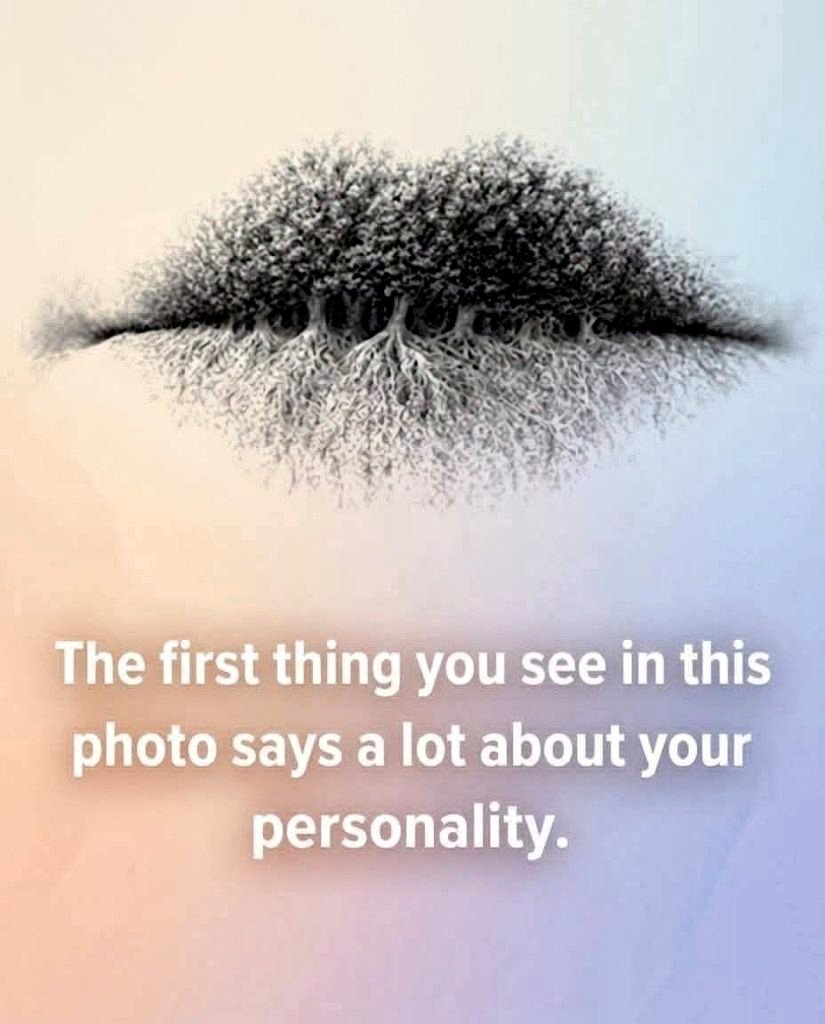
Optical illusions are a great example of this idea. They show that two people can look at the same image and see entirely different things. Each person interprets what they see based on their own mental framework. Internet culture has shared many famous cases of this. For instance, debates on social media about the color of a dress or the tint of a sneaker had millions of viewers looking at the same pictures but coming to very different conclusions. These differences do not imply that one person is right and the other is wrong; they simply highlight how perception works.
Our brains create meaning from the information they process, and this is shaped by individual viewpoints. Images that offer multiple interpretations encourage individuals to trust their first impressions. So, when you view an image like this, your gaze tends to focus on the aspect that seems most prominent. What do you notice first in the picture?
Sources:
Source: Kitchen, by recipes