JAKARTA — Fires are spreading quickly across large areas of forest in Indonesian Borneo, leaving orangutans with fewer places to escape. The flames surround them and destroy the forests they rely on for survival. These fires are affecting a forest landscape that is connected but highly fragmented, which is the habitat for the critically endangered Bornean orangutans (Pongo pygmaeus) found in West Kalimantan. This includes important areas like Gunung Palung National Park and the Mendawak Biodiversity Corridor.
Gunung Palung National Park serves as a crucial refuge for the Central Bornean orangutan, hosting a population that was historically estimated to be around 2,500 individuals. This park is also home to one of the longest-running studies of wild orangutans in the world. Its significance lies in both the number of orangutans and its diverse forest habitats, which support long-term ecological studies and various other species. The nearby Mendawak Biodiversity Corridor plays a supporting role by providing additional orangutan habitat outside of the national park. While it is not fully complete or entirely secure, this corridor helps to maintain, restore, and connect forest patches in a fragmented environment.
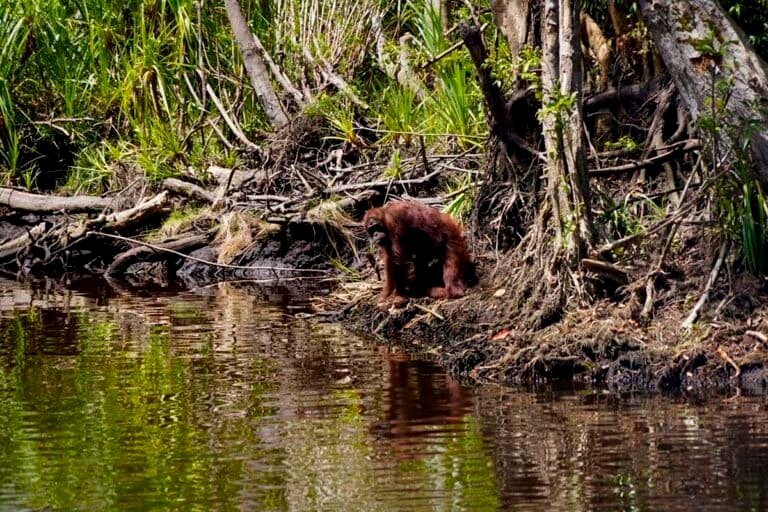
Despite their ecological value, both Gunung Palung National Park and the Mendawak Biodiversity Corridor have experienced wildfires during the current dry season. An extremely strong El Niño has led to hotter and drier conditions throughout Indonesia, making these areas more vulnerable to fires.
Recent spatial analysis by the technology consultancy TheTreeMap shows that hotspots indicating fires began to show up in Gunung Palung National Park starting on August 27. TheTreeMap has also detected fire hotspots that seem to overlap with the core zone of the national park.
This alarming situation highlights the urgent need to address the ongoing threats to Bornean orangutans and their habitats. As fires consume more forest, what steps can be taken to protect these endangered animals and their shrinking environment?
Sources:
Source: Mongabay Animals