Coral bleaching has been reversed quickly using a new technique developed at Stanford University. Researchers reported that corals, previously bleached and white, returned to their healthy state in just seven weeks, marking the fastest recovery recorded. This is the first instance where scientists have seen corals on the brink of death recover through brief contact with healthy coral clones. The findings, which appeared in the journal Science Advances, suggest new ways to restore coral reefs harmed by extreme heat due to climate change.
Coral reefs play a crucial role in protecting coastlines and communities from severe weather and flooding. When ocean temperatures rise, corals expel the beneficial algae that live in their tissues. Losing these algae leaves corals pale, starving, and open to harmful algae invasion. Danny Collins, the lead author of the study, mentioned that while bleached corals may seem to be dying, they are not yet dead.
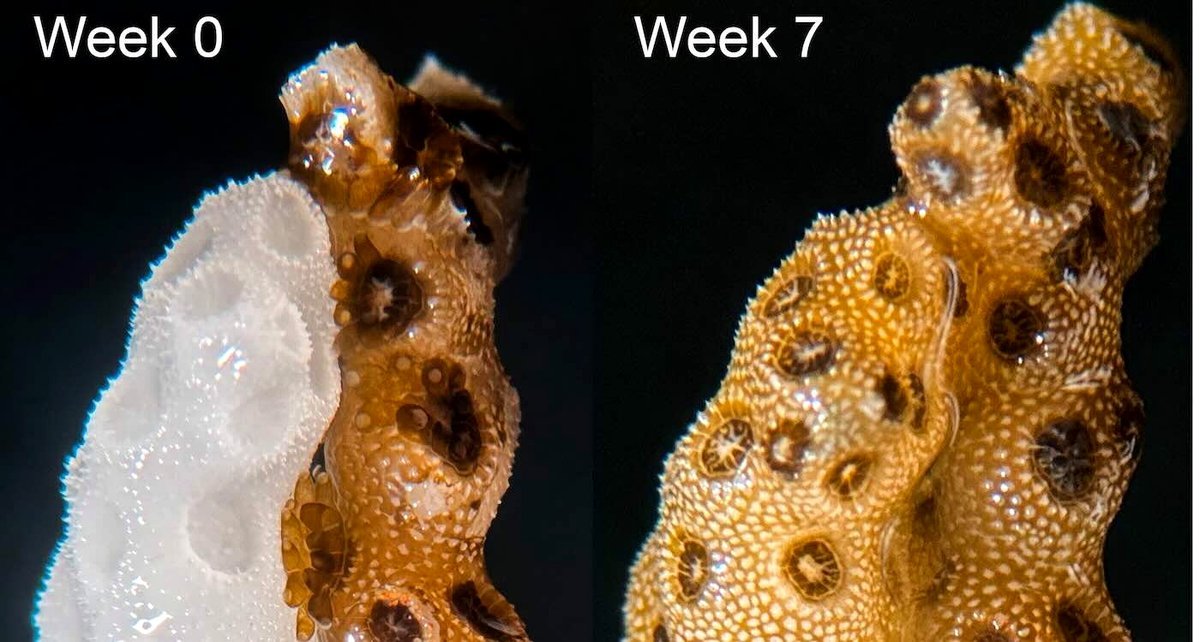
In the lab, corals managed to fully recover from bleaching in weeks after brief contact with healthy corals. The healthy corals were able to send enough helpful algae and nutrients to the bleached corals, starting the recovery process in just three days. Collins, a PhD student at the Doerr School of Sustainability, explained that corals are animals that can create clones, which grow together to form large colonies with the same genes.
In 2025, Professor Steve Palumbi, a coauthor of the study, noticed something interesting in his lab. Two coral fragments, one bleached and one healthy, from the same colony touched each other in a tank. Where they made contact, the bleached fragment started regaining color, indicating the return of beneficial algae. At the same time, Collins was thinking about coral disease and the possibility of harmful bacteria coming from plastic debris. He wondered what would happen if they reintroduced beneficial algae through contact.
Collins set up five pairs of coral fragments close enough to touch, leaving only small gaps between other pairs. The bleached fragments in contact pairs recovered completely in seven weeks, while those without contact died. Palumbi noted that genetically similar corals recognize each other when they make contact, allowing their tissues to fuse. He compared this process to successful organ transplants between identical twins.
Microscopic channels in coral tissues began forming shortly after contact, creating pathways for nutrient transport between corals. The researchers looked into how different durations of contact affected recovery rates and found that after just one week, and in some cases five days, the bleached fragments received enough beneficial algae to recover independently. After being separated, their recovery took only seven weeks, similar to the recovery time for continuously touching pairs. The team discovered that the algae reproducing within the bleached fragments—rather than from the healthy ones—mainly drove the recovery process. Palumbi explained that once beneficial algae enter bleached corals, they multiply rapidly.
For years, researchers have worked on methods to protect corals from bleaching, disease, and more acidic waters, even though many consider bleached corals as hopeless. Some explored solutions like selectively breeding heat-tolerant corals, creating nurseries to restore damaged reefs, and transplanting coral microbiomes. In the upcoming months, the team intends to investigate other ways to deliver beneficial algae to bleached corals without needing continuous contact.
Micheli, a professor at Stanford, remarked that these findings about how corals can naturally recover provide hope for the future. They could lead to important advancements for accelerating reef restoration. What are your thoughts on this breakthrough?
Sources:
Source: Good News Network, by Good News Network