Indonesian officials have put a stop, possibly for good, to what was known as the “world’s largest deforestation project.” The country reached rice self-sufficiency about three years earlier than planned, which means roughly 4 million acres of rainforests, swamps, and peatlands on major Indonesian islands will not be cut down. Although it is unclear what will happen to these areas, the agriculture and forestry ministries, along with the Indonesian National Economic Council, decided that any new agricultural projects would occur on land that has already been used for farming.
Hashim Djojohadikusumo, the Indonesian president’s younger brother and special envoy for climate and energy, spoke at a sustainability forum in Jakarta in early October. He mentioned that 4.4 million acres of forests previously set for rice plantations would stay untouched. The initiative to achieve rice self-sufficiency was initially intended to run until at least 2029 but was completed sooner due to incentives, better crop varieties, and government fertilizer support. This plan faced significant opposition from international environmental organizations and local activist groups.
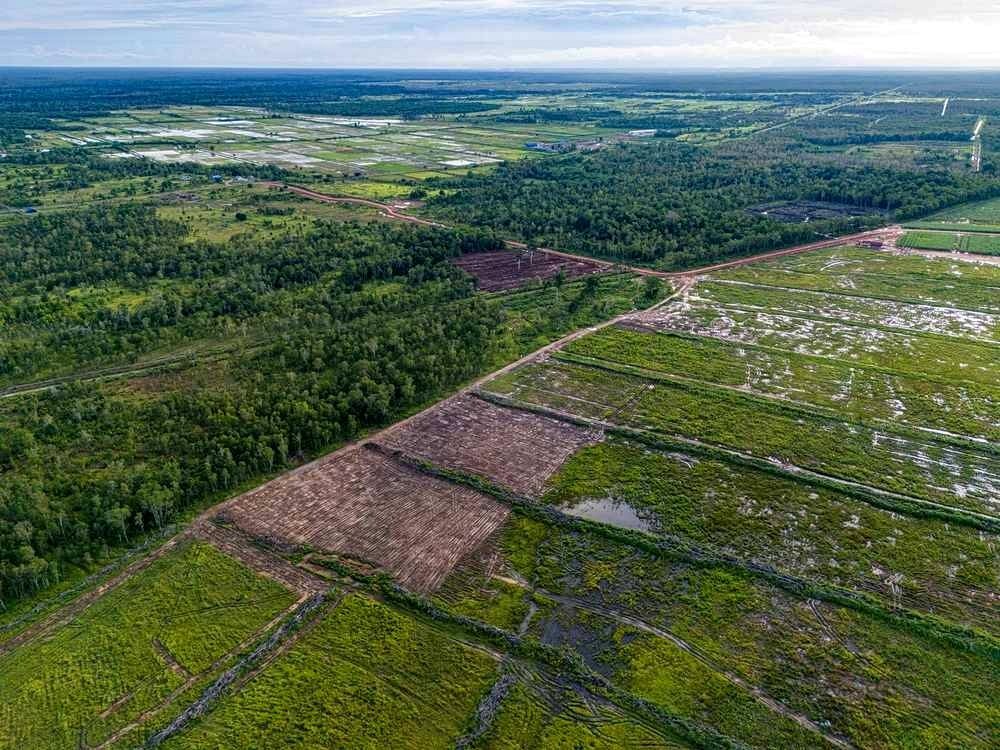
Hashim indicated that the government believes there is no longer a need to expand rice farming into forested areas, particularly in Kalimantan and South Papua on New Guinea. Mari Elka Pangestu, who serves as deputy chair of the National Economic Council, noted that the government plans to utilize degraded land moving forward. She stated there are over 28 million acres of such land available for agriculture. Together, Hashim, Mari, and the agriculture and forestry ministers have agreed that any future expansion of subsidized farming, whether for food or bioethanol, will occur on this degraded land.
According to the Jakarta Post, the region known as Borneo, which is mostly part of Indonesia, covers 73% of its area and includes many biodiverse ecosystems, home to species like orangutans and proboscis monkeys. However, the rice and sugarcane projects planned for South Papua were particularly contentious. These projects would have disturbed peatlands and swamp ecosystems, which capture more carbon than typical rainforests.
Since 2024, around 90,000 acres of these landscapes were transformed into plantations linked to the rice initiative, as reported from satellite data by Mighty Earth. Its CEO, Glenn Hurowitz, stated that the Indonesian government’s decision has significant implications for people, nature, and climate worldwide. He added that Mighty Earth and its partners would monitor how this decision is implemented and support local communities in Papua to restore any damage already done. This decision could potentially encourage further efforts to protect nature and promote sustainable agriculture. What are your thoughts on this development?
Sources:
Source: Good News Network, by Andy Corbley