Modern kitchens have many impressive features, such as ice and water dispensers in refrigerators and touch-activated faucets. These conveniences might lead some to think that today’s kitchens are the best ever. However, a video from the National Archives showcases a 1949 kitchen design that has caused many to rethink this idea. The video, titled “A Step Saving Kitchen,” was made by the USDA’s Bureau of Human Nutrition and Home Economics and narrated by Lenore Sater, a home economist. It highlights an efficient kitchen designed mainly for farm homes, measuring only 11 by 16 feet, which stands in contrast to today’s larger but often less functional spaces.
The video serves as a historical snapshot, featuring cabinetry and fashion styles from that time, while also reflecting the gender norms of the era, assuming that only women would be in the kitchen. While it is positive that innovations were focused on what was seen as “women’s work,” it also shows how much societal views on gender roles have evolved since the 1940s.
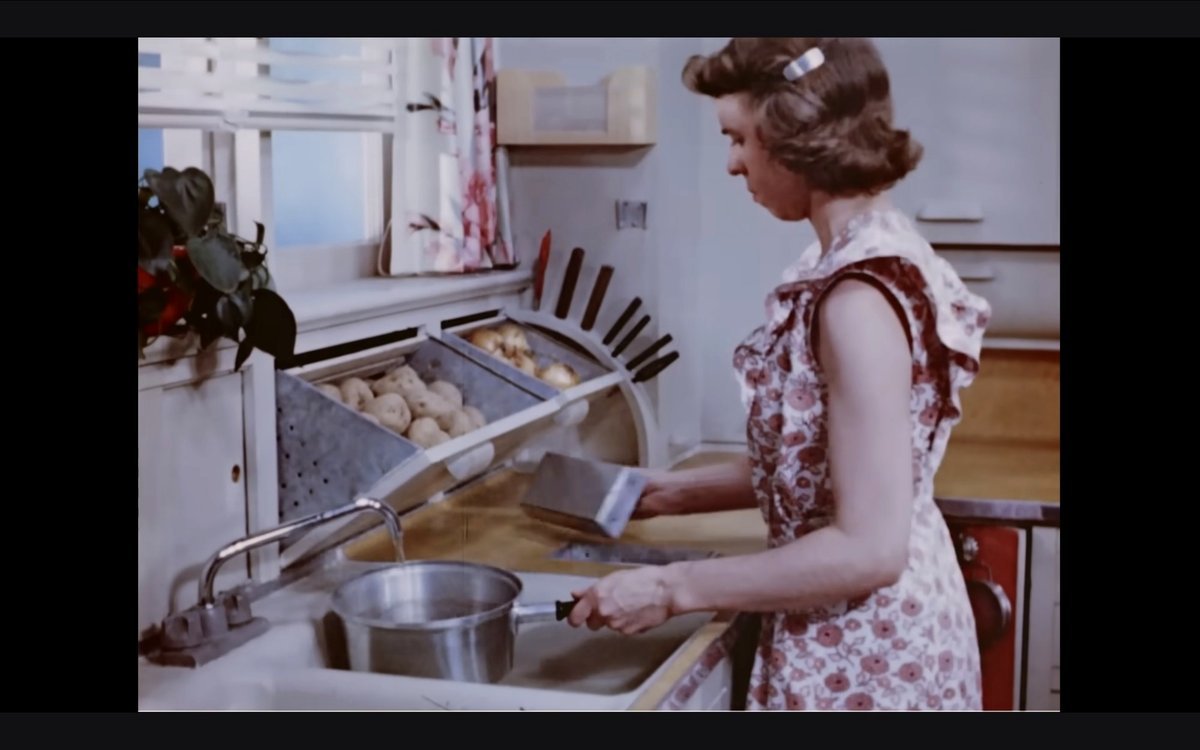
The creation of this video was rooted in a broader movement towards scientific innovation that started in the late 19th and early 20th centuries. Food historian Sarah Wassberg Johnson explains that this kitchen design is the result of years of research. During the Progressive Era, interest in applying science to everyday life grew, leading to the Efficiency Movement, which aimed to eliminate inefficiencies in various sectors, including households. Spearheaded by mechanical engineer Frederick Winslow Taylor, this movement influenced home economics and eventually attracted the attention of the U.S. government.
A report from the USDA published in 1948 stated the goal of kitchen design was to help homemakers save time and effort by creating layouts that minimized unnecessary movement. Various arrangements, such as U and L shapes, were proposed to simplify cooking tasks. This focus resulted in the creation of the informative video.
The kitchen’s features have drawn admiration from many viewers, with comments praising its thoughtful design and functionality. Some have expressed a desire for similar features in their own kitchens, highlighting the lasting appeal of the practical elements showcased in this historical video. What do you think about the design of this 1949 kitchen?
Sources:
Source: Upworthy, by Annie Reneau