For many years, experts believed that the elaborate braided hairstyles seen in Roman times were created using wigs. However, a hairdresser named Janet Stephens challenged this idea and offered a different perspective. Based in Baltimore, Stephens has always had a passion for hair, but her interest in ancient hairstyling began in 2001. Her journey started during a visit to The Walters Art Museum, where she saw Roman busts displayed from multiple angles instead of just against a wall. This view helped her discover the reasoning behind the hairstyles and led her to think that they might not have been made with wigs, but with creativity.
At home, Stephens attempted to replicate these ancient styles using practice dummies and modern tools, but her efforts were unsuccessful. As she researched Roman beauty and fashion, she noticed that many scholars lacked a practical understanding of how hair behaves. Driven to solve the mystery, she dedicated herself to years of hands-on practice and historical research, even tackling ancient texts with the help of Google Translate.
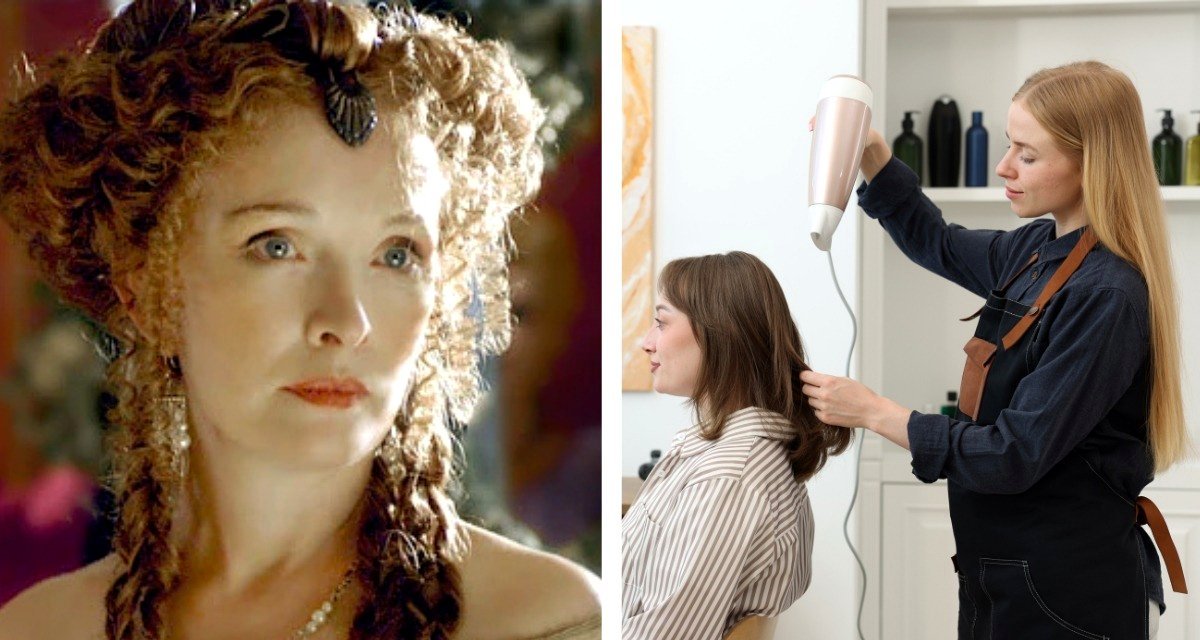
In 2005, Stephens came across a clue in a Latin dictionary that changed everything. The Latin word acus can refer to both a “single-prong hairpin” and “needle and thread.” Traditionally, scholars had only considered the first meaning, which made sense since single-prong hairpins were used to secure wigs. However, Stephens thought it was possible that the Romans might have actually referred to the “needle and thread” interpretation. She then discovered that she could recreate the hairstyles by sewing the braids together with a needle and thread.
Thus, a hairstylist without formal training in archaeology made a significant discovery in the field. Her research was published in the 2008 issue of the Journal of Roman Archaeology, and in 2012, she presented a video titled “Julia Domna: forensic hairdressing” at the Archaeological Institute of America. By 2013, she had also recreated the hairstyle of the Roman Vestal Virgins. Nowadays, her YouTube channel showcases both historical hair recreations and modern styling techniques.
This story highlights the importance of viewing history from both scholarly and practical perspectives. It also illustrates how personal experiences can provide unique insights into subjects that might seem unrelated. What do you think about the connection between hairstyling and archaeology?
Sources:
Source: Upworthy, by Heather Wake