A video has recently gained popularity showing a large ship opening in the middle and releasing many cinderblocks into the ocean. The ship, known as a split hopper barge, is typically used for transporting dredged soil. While dropping concrete into the sea may appear to be littering, these blocks are actually beneficial for marine life. When concrete blocks are placed in the ocean, they provide a surface for coral and algae to grow, eventually creating a reef.
This initiative is part of the Grenada Artificial Reef Project (GARP), which aims to address the decline of coral reefs around the world. In 2013, Phil Saye, who owns the Dive Grenada dive shop, along with his team, began placing concrete pyramids in an area of the Caribbean Sea near Grenada’s beaches.
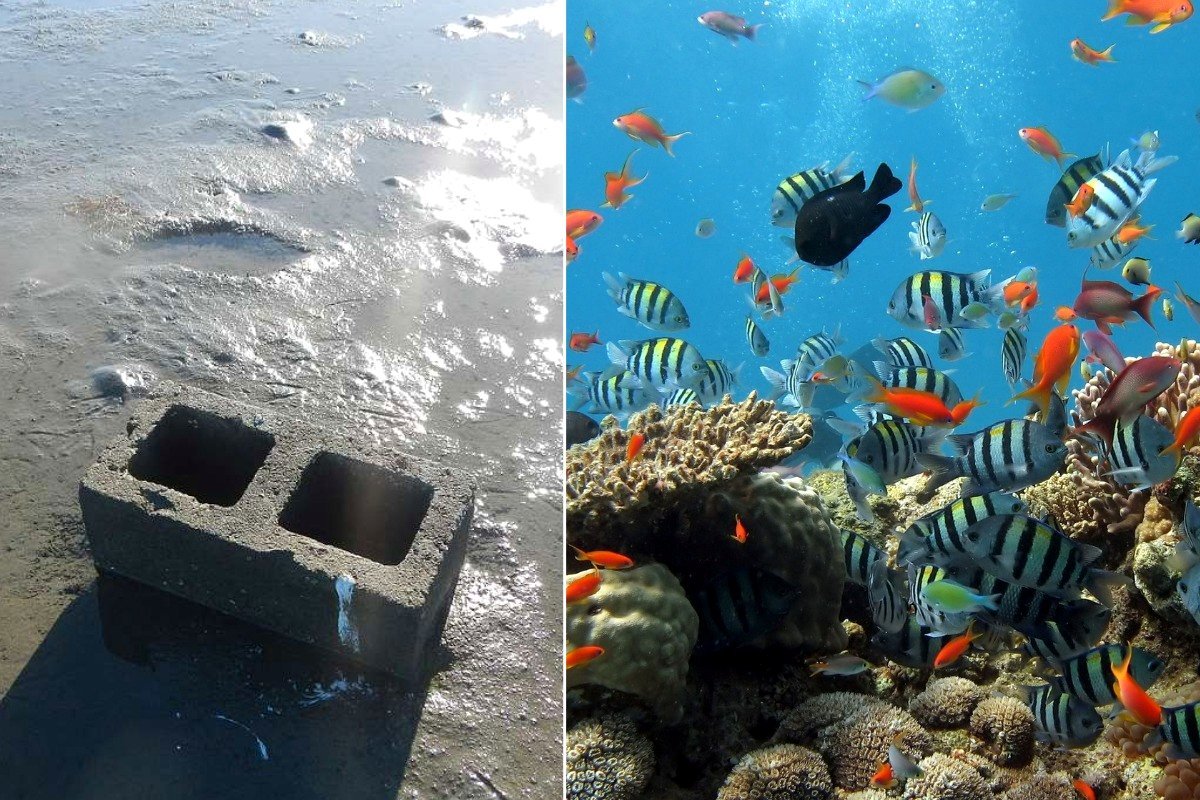
In just three months, the concrete pyramids attracted a lot of marine life. The blocks offered shelter for various sea creatures that needed a safe place to hide, nest, or find food. According to the project’s website, initial growth included algae and colorful sponges, followed by a variety of invertebrates such as worms, lobsters, crabs, and urchins. As time went on, juvenile fish like squirrel fish and goat fish started appearing.
After about a year, the marine life continued to thrive, transforming the pyramids into lively communities. Eventually, stony and brain corals began to grow on the structures, which are considered essential for coral reefs. Over the years, more coral has been developing on the blocks, and various fish and other creatures have settled in. The project has grown to include over 30 species of fish and 14 types of corals, creating a balanced ecosystem.
A peer-reviewed study from 2024 noted that the pyramids resemble natural reefs in many ways but differ in the types of algae present. Currently, there are about 100 pyramids at this site, each made from 30 cinderblocks. Similar projects are underway in locations around the world. GARP is not the only project aimed at improving marine habitats using concrete, which has been shown to effectively support marine life and encourage coral growth.
However, not every attempt to create artificial reefs has been successful. In the 1970s, a project off Florida’s coast used around one to two million old tires to form new habitats for fish. This project, known as Osborne Reef, ended up being an ecological disaster. The tires were scattered by storms and ocean currents, causing damage to natural reefs and washing ashore. Efforts to clean up the area are ongoing, with Florida’s Department of Environmental Protection having removed over half a million tires so far.
What do you think about artificial reefs and their impact on marine ecosystems?
Sources:
Source: Upworthy, by Evan Porter