Princeton alumni have created a groundbreaking device designed to filter microplastics from wastewater on a large scale, which has already been installed in Atlantic City. This innovative system mimics certain water-repellent plants that repel water but attract microplastic particles. As the water flows through the device, the microplastics are captured and can be collected for recycling. The Atlantic County Utilities Authority (ACUA) in New Jersey emphasizes the importance of removing microplastics from water for public safety. Although there are currently no federal laws requiring utilities to eliminate these contaminants, the ACUA is taking proactive steps.
Microplastics often enter wastewater from sources like washing machines, stormwater runoff, and litter. Many treatment facilities across the country primarily focus on human waste, solid waste, heavy metals, and other pollutants, but microplastics pose a unique challenge. Matt DeNafo, president of the ACUA, noted the significance of removing plastics from wastewater since they can end up in the ocean, affecting marine life and, ultimately, human health.
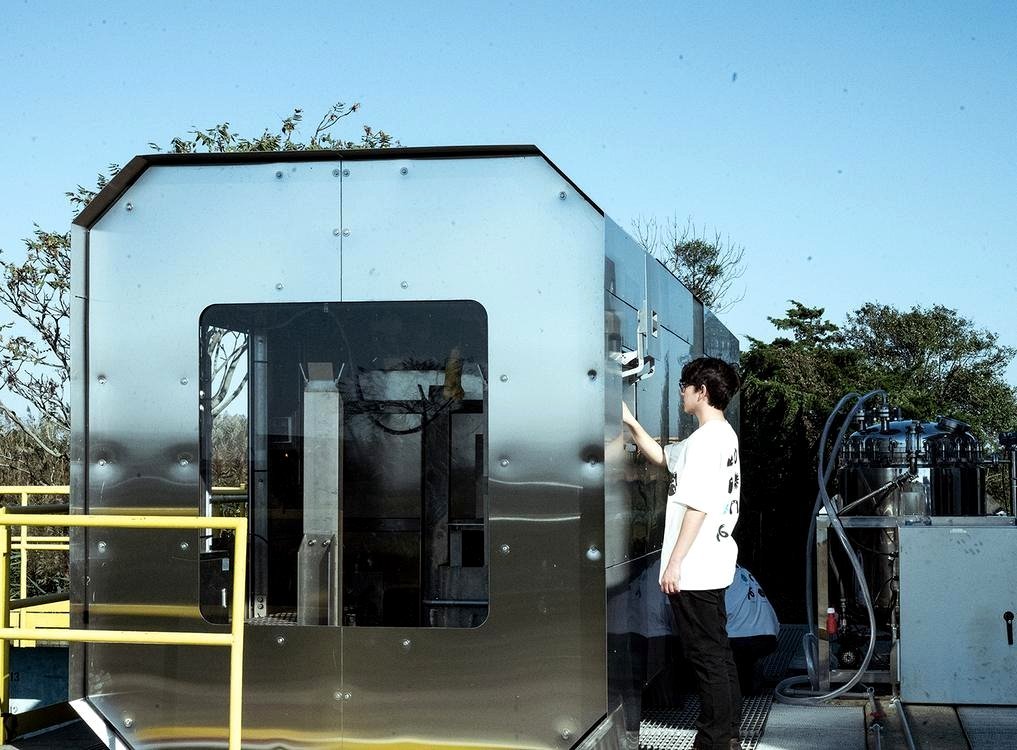
The ACUA has partnered with PolyGone Technologies, a startup founded by Princeton graduates Nathanial Banks and Yidian Liu, for a two-year pilot program. This program aims to determine if their large filtration system can effectively reduce pollution in a city with 40,000 residents. Banks, co-founder and CEO of PolyGone Technologies, mentioned that this initiative represents a new era of treatment technology that can handle difficult contaminants using minimal materials and energy. He highlighted that it is remarkable to have the world’s first such system in Atlantic County.
Laboratory tests indicate that a prototype of the device can eliminate up to 98% of microplastic particles from wastewater, and the pilot program will strive to achieve similar results on a commercial scale. Interestingly, WHYY reported that Liu and Banks are architecture students, and Liu shared that designing the large device was the most enjoyable part of the project. In the coming years, society may reflect on microplastics as one of the biggest environmental challenges. Unlike previous pollution problems, microplastics have been found everywhere, from the deepest parts of the ocean to the highest mountains and within human organs.
Many individuals are actively seeking solutions to this issue. GNN has highlighted various inventions and achievements aimed at filtering and removing microplastics. Liu and Banks also plan to adapt their technology for residential applications, while California is home to another of their large-scale installations. What do you think about these efforts to tackle microplastic pollution?
Sources:
Source: Good News Network, by Andy Corbley