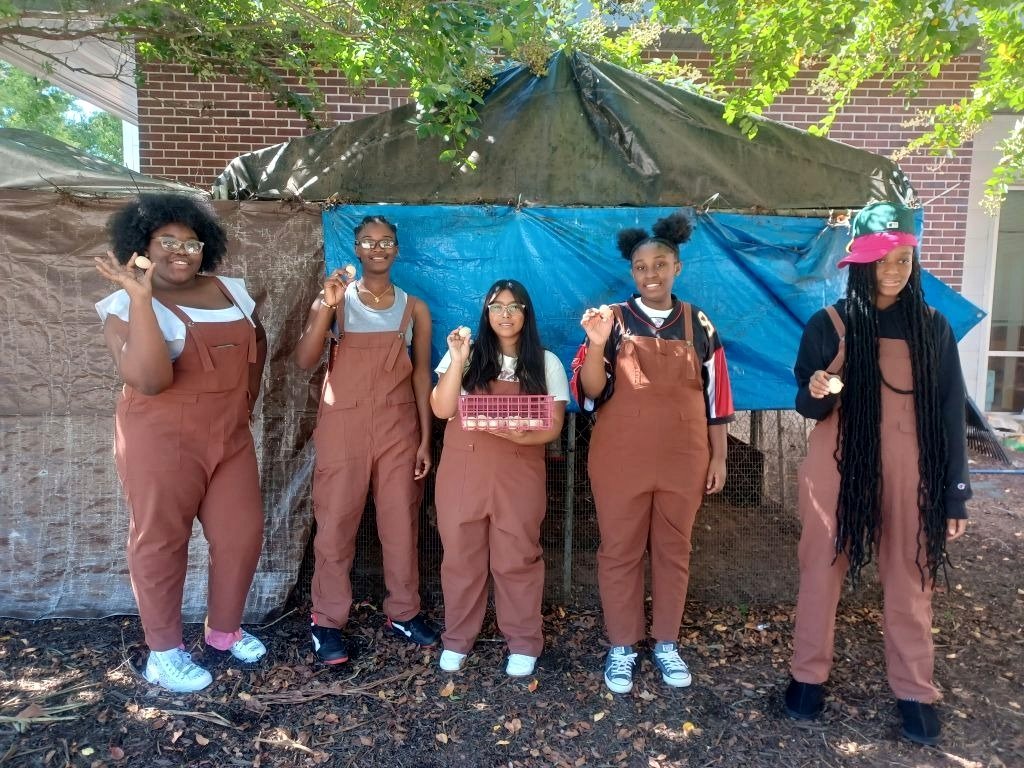
In a classroom at the Coretta Scott King Young Women’s Leadership Academy in Atlanta, a group of high school girls is growing vegetables in a unique way. After much experimentation and learning from their mistakes, they have created a small greenhouse within their classroom. Using PVC pipes and plastic sheeting, this “smart garden” features automated sensors that water and keep track of the plants. This innovation allows for year-round vegetable growth, which is important in a community that does not always have easy access to fresh produce. The garden project began with a simple inquiry: What issues exist in your community, and how can you help? This question is central to the Ciena Solutions Challenge, a program by Ciena and Digital Promise that encourages middle and high school students and their teachers worldwide to develop solutions to local problems. Winners, like those at the Coretta Scott King Young Women’s Leadership Academy, receive $3,000 to help grow their projects. These initiatives, including the automated garden, can significantly improve local communities.
This approach to solving real-life issues is part of Powerful Learning, a model created by Digital Promise. It focuses on four key areas: connection, agency, purpose, and curiosity. This model inspires students to view themselves as engaged learners, identify important problems, and use tools like AI to make a difference. The Ciena Solutions Challenge supports students in applying the principles of Powerful Learning to generate meaningful outcomes.
Around the world, other awardees from the Ciena Solutions Challenge are using their creativity and knowledge of their communities to tackle pressing issues, such as increasing oral cancer rates and protecting families during floods. While their projects vary, they all start with the same idea: noticing a problem and taking action.
In Indonesia, flooding is a common issue during the rainy season, which lasts from November to March. Floodwaters can pose dangers, especially by risking the safety of household electrical systems, leading to the potential for electrical shocks. Students from State Vocational High School 1 Paringin recognized the need for safer homes. They developed a device called FlowSafe to enhance community safety, an urgent aim after floods in December 2025 impacted over 10,000 people and flooded more than 3,000 houses. FlowSafe monitors water levels in homes and automatically cuts off electricity when water reaches a certain level. It can also restore power when floodwaters go down. Homeowners can set the water level that triggers the device, making it adjustable for different homes.
In addition to protecting individual houses, FlowSafe can activate community alarms and send alerts via Blynk and WhatsApp, allowing residents to stay informed about water levels and dangers. The students faced many challenges while turning FlowSafe from an idea into a working prototype, including testing and improving the device. The final product aims to give families reassurance and reduce risks before they become serious.
What problems do you think students can tackle with their creativity?
Sources:
Source: Upworthy, by Upworthy