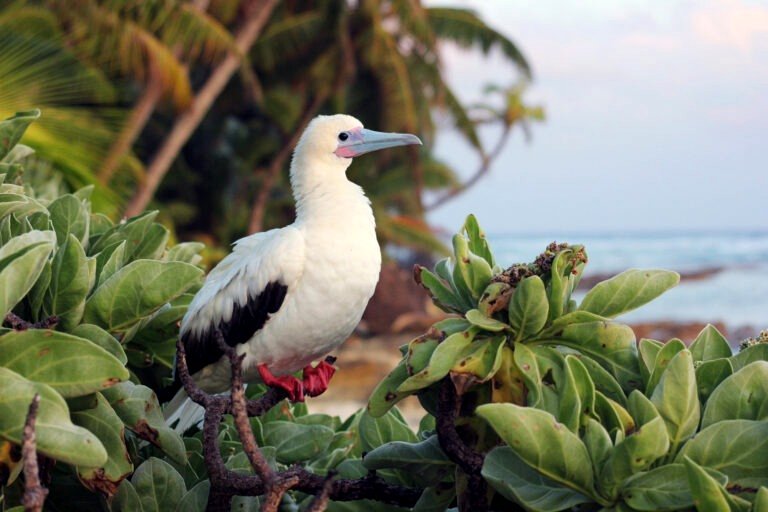
Low-lying tropical atoll islands are highly susceptible to climate change. However, a new study suggests that these islands can cope with rising sea levels if they are covered with native forests and have strong seabird populations. Seabirds help by transporting nutrients from their feeding grounds in the ocean to their nesting and roosting sites on land, and eventually back to the sea. The study published in Science Advances explores how seabird guano, which is rich in nutrients, flows through the land and ocean ecosystems of atoll islands. The researchers found that these nutrients, together with native plants, enhance the processes that create and sustain the islands’ reefs and structural foundations, even as sea levels rise.
Nicholas Graham, a distinguished professor at Lancaster University in England and the lead author of the study, mentioned in a video call with Mongabay that restoring atoll islands—many of which have lost their seabirds and now have coconut palms instead of native trees—can improve their climate resilience and help biodiversity. Graham noted that the research highlights the importance of seabirds and native vegetation in supporting the resilience of these islands against rising seas, which he finds quite interesting and positive.
Graham and his team started investigating the links between seabirds, islands, and reefs nearly ten years ago.
What do you think about the role of seabirds and native vegetation in protecting atoll islands?
Sources:
Source: Mongabay Animals, by Morgan Erickson-Davis