A small historical society on a Scottish island has confirmed that it was one of the earliest centers for spreading Christianity in the British Isles. This significant finding highlights the island’s role in history, as archaeological discoveries show that the early medieval monastery was a hub for both crafts and faith. Lismore Island, located in the Inner Hebrides and measuring 9 miles across, derives its name from an ancient monastic site linked to the early Christianization of Britain called Lios Mòr. This site is contemporary with the famous Iona church, known as one of the oldest Christian centers in Western Europe, which played a key role in promoting monastic life in the Gaelic-speaking kingdom of Dál Riata, covering areas like Argyll, much of the Hebrides, and parts of County Antrim in Northern Ireland.
Recently, the Lismore Historical Society began investigating the island’s 13th-century cathedral. Many of the island’s 170 residents contributed to fund the excavation, which led to three major discoveries that suggest Lios Mòr was on par with Iona and crucial to the history of the Church in Northern Europe. Dr. Clare Ellis from Argyll Archaeology, who directed the excavations for the Lismore Historical Society, explained that while Lios Mòr was known through historical texts and local lore, little archaeological evidence had been found to support its significance until now. The goal of the research was to determine if the site of the later medieval cathedral was also where Mo Luóc’s early monastery once stood and to understand the scale and nature of the settlement.
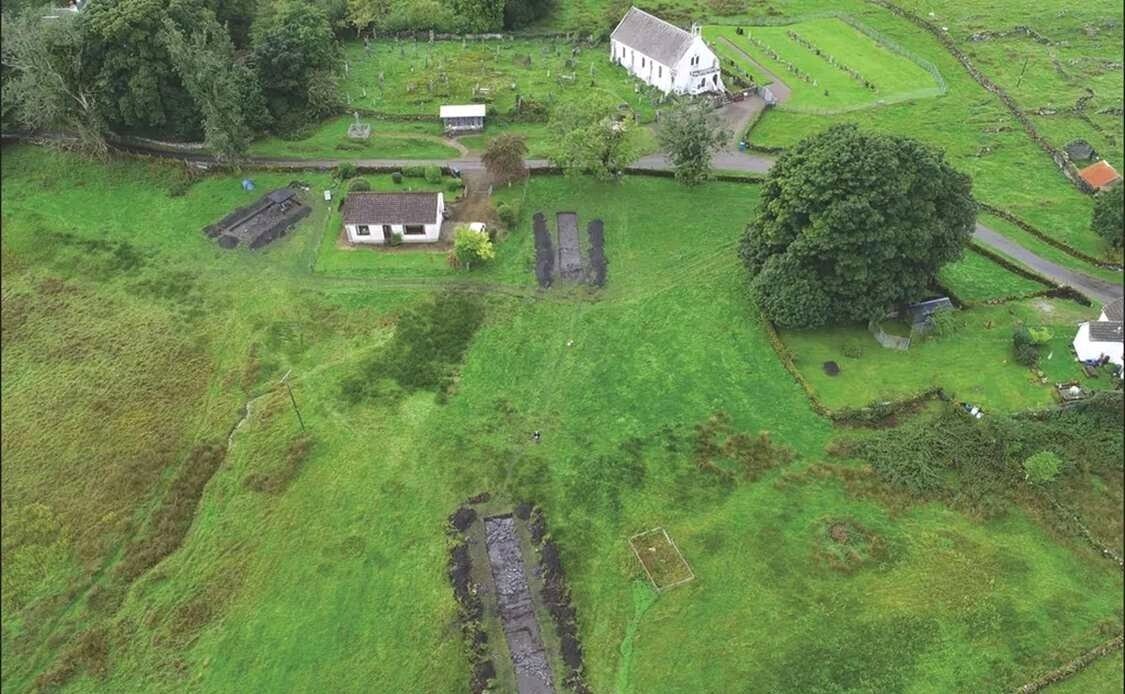
The excavations and geophysical surveys revealed extensive burial sites, areas for high-status crafts, early structures, and rare finds related to precious metalworking. These discoveries indicate that Lismore served more than just as a small island church. Specifically, six burials from between 650 and 1040 CE were found alongside large carved stone cross fragments. In a different area, remains of craftwork, handmade pottery, and tools were located within an oval building that had a limestone-paved base. The third excavation site uncovered a trench with around 1,000 pieces of debris, suggesting skilled metalwork. Additional evidence included small crucibles found in the soil, which were likely used to melt metals such as copper, silver, and gold for casting.
Professor Gordon Noble from the University of Aberdeen, who co-authored the related research paper, mentioned that for many years, Lismore’s early monastery was primarily known through written records and community stories. The recent findings make it clear that this site was a vibrant center for worship, craftsmanship, and education, possibly rivaling some of the most notable monasteries in early medieval Britain. In their published paper in Antiquity, Noble and his colleagues indicated that this productive activity likely took place within the monastic area, although there may have been some secular influence indicated by the production of items like brooches. They also noted that during this period in Ireland, monasteries produced secular items for trade, showing evidence of economic connections between elite secular and religious centers.
Bob Hay, a former island resident who helped organize the funding and volunteers for the project, stated that the revelations at Lismore highlight the importance of community-led archaeology in furthering academic knowledge. He emphasized that local volunteers and the Lismore Historical Society were key in exploring the site and uncovering findings that have significantly enhanced the understanding of one of Scotland’s vital early Christian locations. What do you think about the discoveries made on Lismore Island?
Sources:
Source: Good News Network, by Andy Corbley