Giacomo De Mola was preparing for a spearfishing competition in June 2026 when he made an incredible discovery. The 46-year-old spearfisher, along with his friend Igor Bisulli, was scanning the seabed near Mazara del Vallo on Sicily’s western coast using sonar to find fish habitats. During their search, they detected a large object about three or four miles offshore. Initially, De Mola thought it might just be a big rock.
Curious, he descended about 150 feet, using his freediving skills and recording the dive with a GoPro. Although the visibility was not ideal, he saw a vast expanse of amphorae beneath him. This led to the discovery of a Roman merchant shipwreck, believed to have sunk between the second and first centuries BC, with its cargo still present. Italian media reported that the ship’s hull is approximately 70 feet long and 20 feet wide. The amphorae are arranged in a mound nearly six feet high, with at least 500 of them, and possibly many more. Most of the amphorae are Dressel 1A types, which were commonly used to transport wine during that era.
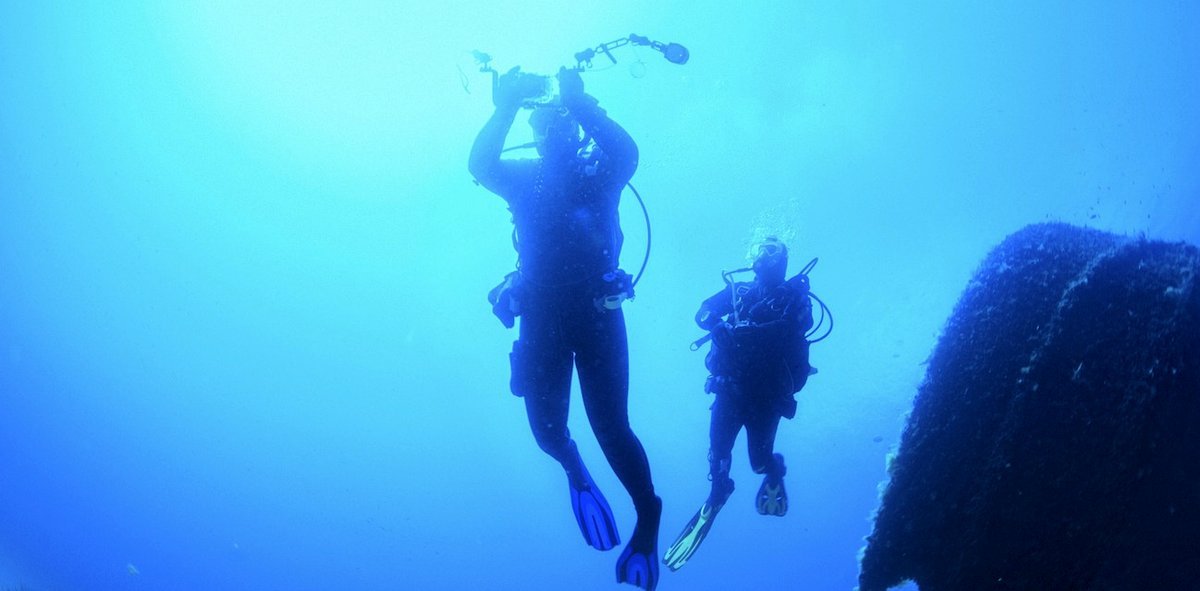
The type of amphorae is significant for archaeologists, as it helps identify the clay and markings, revealing information about trade relationships in the region. De Mola suggested that some jars might be North African, including at least one identified as Neo-Punic. After his find, he promptly informed the Superintendent of the Sea for the Sicilian Region, and archaeologists later confirmed the shipwreck’s significance. The amphorae had likely been buried under sediment for centuries and were uncovered by ocean currents.
De Mola expressed that it was an extraordinary feeling to think that they were among the first humans in nearly 20 centuries to see that place again. Italian Culture Minister Alessandro Giuli called the discovery one of the most significant underwater finds in recent years. He noted that the wreck tells the story of trade routes and exchanges that made the Mediterranean a crossroads of civilizations. Lucy Blue, a maritime archaeologist from the University of Southampton, commented that a well-preserved wreck like this adds to the understanding of trade before the rise of the Roman Empire. Additionally, the tightly packed amphorae might protect the ship’s wooden hull from marine organisms, making this find particularly rare in Mediterranean archaeology.
Sources:
Source: Upworthy, by Adam Albright-Hanna