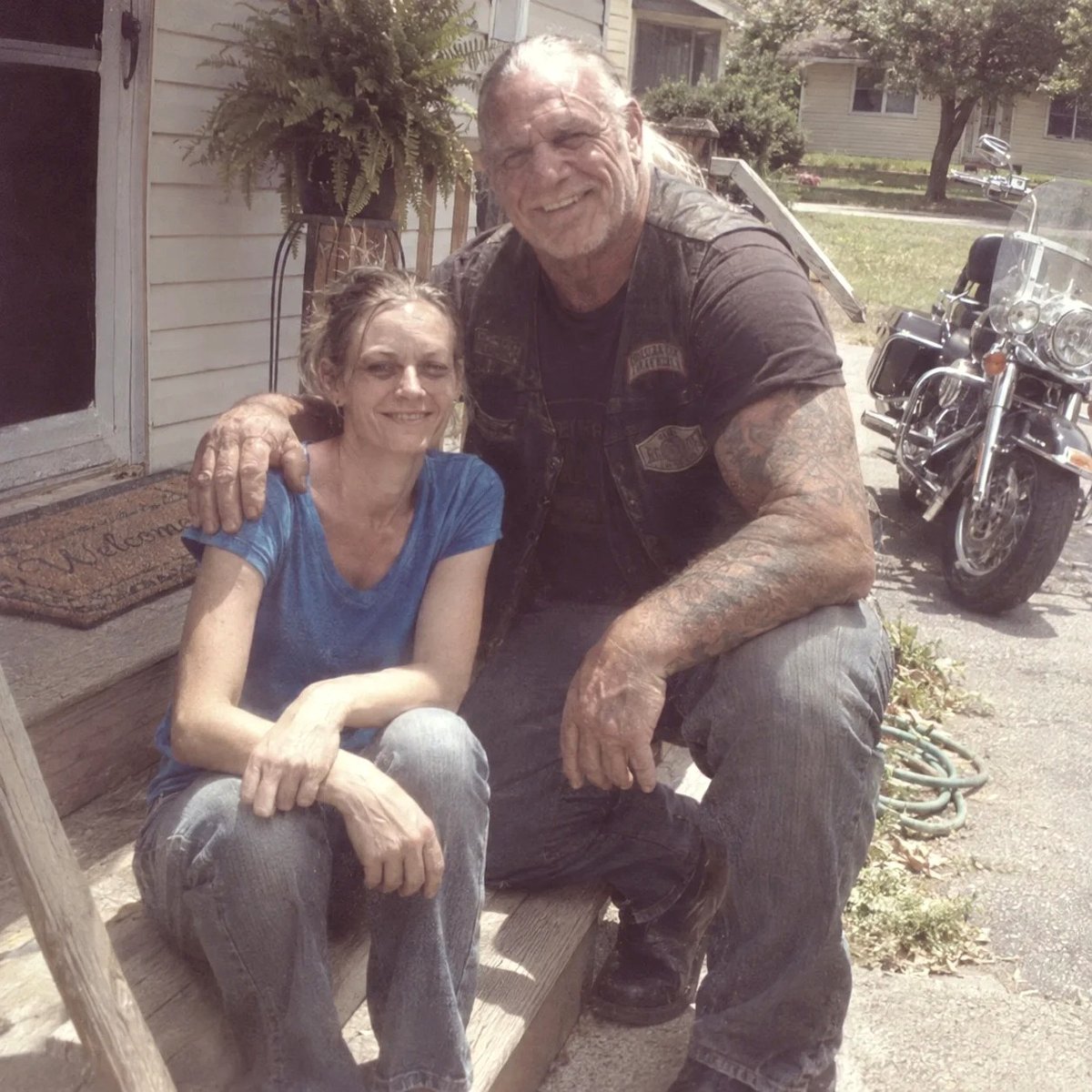
A biker knocked on the author’s door at midnight. He introduced himself by saying that the author’s mother had sent him before she passed away. The author’s mother had been buried for eleven days. She was a church organist from Dayton who referred to motorcycles as the devil’s lawn mowers, and the author believed she had never interacted with a biker. The man was tall, possibly six-foot-four or six-foot-five, with a white ponytail and large hands. There was a black Road King motorcycle in the driveway that was cooling down.
The author told him he had the wrong house, keeping the chain on the door. The biker insisted that he knew her name was Jenny and that her mother called her Peanut. He even mentioned a scar on her chin from a swing set incident in 1983 and how she avoided pickles because her brother had once made her eat an entire jar. No one else knew these details, not even her husband. Then the biker asked if Mark was home, which made her stomach drop. She explained that Mark was working nights that week and asked how he knew her husband’s name.
The biker took out a folded piece of notebook paper from his vest, and the author recognized her mother’s shaky handwriting. The note expressed concern for the author and suggested that she was in trouble. It warned her not to let Mark do to her what Frank, her father, had done. For four years, the author had hidden her arms under long sleeves, claiming to her mother that she simply bruised easily, and she thought her mother believed her.
The biker told her that her mother had asked him to check on her and that he promised to do more than that. The author insisted he needed to leave, fearing Mark’s reaction when he got home. Just then, she saw Mark’s headlights approaching much earlier than expected. He exited his truck with a tire iron in hand. The biker remained calm, slowly turning to face Mark and pulling out his phone, which was already lit up with a red dot blinking.
He greeted Mark casually, as if they were acquaintances, and suggested Mark could say hello. Mark stood at the bottom of the porch steps, and his expression changed to one of forced friendliness. He lowered the tire iron and questioned the biker’s identity, explaining that he had received an alert about a stranger at their door at midnight. The author then realized how Mark knew about the biker; he had installed a doorbell camera two summers prior, claiming it was for her safety.
The biker replied that he would call the police instead of brandishing a tire iron. Mark laughed as if they were resolving a misunderstanding. He urged the author to assure the biker that everything was fine. In that moment, the author spoke without thinking, stating that everything was indeed fine. The biker looked at her for a moment but did not argue or show disappointment. He simply nodded, seeming to accept her words.
He put his phone back into his vest, walked down the steps, and passed Mark closely without touching him. At his motorcycle, he took time to put on his gloves one finger at a time. He told the author he would be at the Waffle House on Route 4 until sunrise, mentioning that her mother had expected her to say everything was fine and that she would repeat it multiple times before admitting the truth. After starting his motorcycle, he rode off into the night, the sound lingering long after he had disappeared.
Inside, Mark did not raise his voice. Instead, he locked the door and placed the tire iron on the kitchen counter, where the author would notice it, and then extended his hand.
Sources:
Source: bikersbyte.com, by David Hog