When the documentary *You Can See Everything* surprisingly exceeded box office expectations with a huge $15 million opening, it sparked conversations. The buzz wasn’t only due to the film’s shocking content. A teaser trailer released 40 days before the movie’s release also caught the attention of many viewers. This trailer showed close-up shots of Elizabeth Holmes’ face, which made people feel uneasy. As viewers shared their feelings on social media, they struggled to explain why Holmes made them feel so uncomfortable. Microexpression experts are now exploring the psychological reasons behind this strong reaction.
One key aspect lies in Holmes’ eyes. Annie Sarnblad, a Facial Action Coding System (FACS)-certified expert, described her gaze as a “dissociative gaze.” Psychologists refer to this involuntary reaction as a “thousand-yard stare,” which often indicates intense stress and difficulty in dealing with past trauma. When someone experiences this level of distress, they might mentally disconnect from their surroundings. For viewers, this blank stare sends a survival signal, making them feel alert. Sarnblad mentioned that it activates the nervous system, creating a sense of unease.
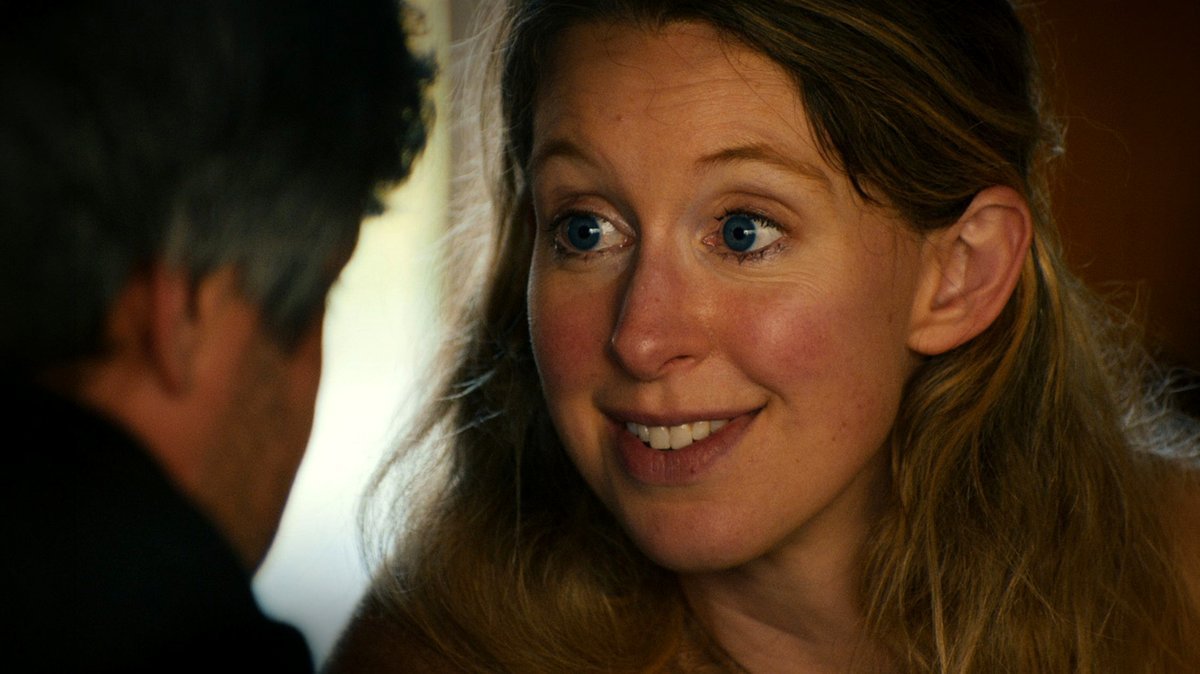
However, this vacant gaze is not alone; it is paired with Holmes’ forced smile. Sarnblad compared it to the exaggerated grin of the Joker, a well-known character in popular culture. Similar unsettling smiles can also be seen in the Paramount Pictures films *Smile* and *Smile 2*.
The combination of an unblinking gaze and a seemingly cheerful smile can have different interpretations. Body language expert Sean Johns, from BodyLytics, explained that Holmes’ expressions convey conflicting messages, which is why viewers may feel disturbed. He noted that her expressions suggest she is startled while also trying to gain approval. The top half of her face seems to plead for belief, while the lower half gives a false impression of calmness.
This confusing mix of emotions makes more sense within the film’s context. The documentary was filmed inside Holmes’ home just four weeks before she began a lengthy prison term for corporate fraud. Johns commented that Holmes wanted the documentary crew to trust her, especially under the intense scrutiny she faced on camera. The film presents a unique and complex view of human behavior under extreme pressure, particularly when someone is desperate for validation. This moment highlights the intersection of pop culture and psychology.
What do you think about the reactions to Elizabeth Holmes’ expressions in the trailer?
Sources:
Source: Upworthy, by Patrick Hamilton