In Malaysia’s marine protected area, microplastics have been discovered within the skeletons of corals. A recent investigation published in the journal Regional Studies in Marine Science examined this issue specifically in Pulau Redang Marine Park, located in the southern part of the South China Sea. This area, celebrated for its clear turquoise waters and diverse coral reefs, has been under protection since 1985.
Researchers from Universiti Malaysia Terengganu (UMT) analyzed 200 samples of coral from five sites throughout the park, situated off the eastern coast of Peninsular Malaysia. They found that 64% of the coral fragments contained microplastics. These tiny particles, which are about 5 millimeters (0.2 inches) or smaller, originate from various sources, including industrial pellets and microbeads found in cosmetics, as well as the degradation of larger plastic materials such as bottles and fishing gear. Microplastics have been detected in many environments, from mountain tops to ocean floors, and they can travel long distances once they enter the sea.
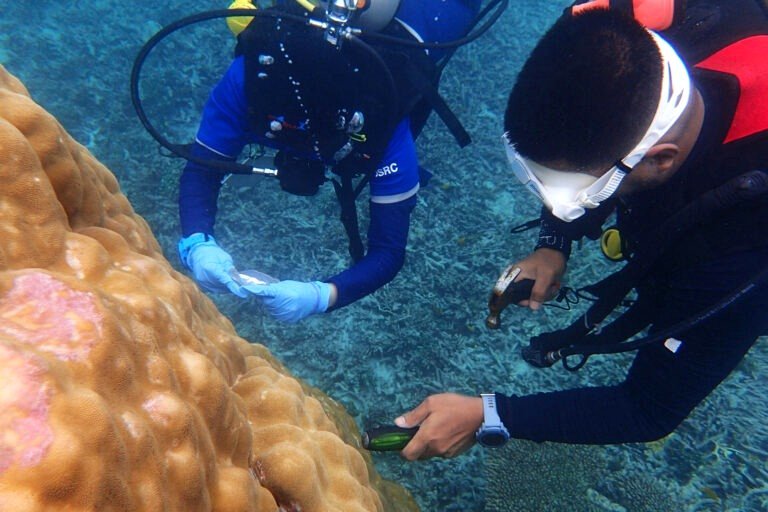
The lead author of the study, Ong Chai Kee, noted that finding microplastics in corals was somewhat unexpected. Despite the vastness of the ocean, he was surprised to see how widely these small plastic particles have infiltrated coral systems. To prevent contamination during their work, Ong Chai Kee carefully wrapped the sample containers in foil before conducting further analysis.
What are your thoughts on the impact of microplastics on marine life?
Sources:
Source: Mongabay Animals, by Yenni Kwok