A recent survey has shown that the giant tortoise population on Aldabra, a Seychelles atoll, has significantly increased, reaching around 180,000 individuals. This number is the highest ever documented for the species and surpasses the human population in the Seychelles. The analysis was conducted by the Seychelles Islands Foundation (SIF) in partnership with the University of Exeter, over five years of data collected from 2018 to 2022. This update is the first since the estimated count of 100,000 tortoises reported in the late 1990s.
Aldabra Atoll is notable as one of the two places globally where giant tortoises live freely, with the Galapagos hosting a smaller number of these reptiles. Dr. Frauke Fleischer-Dogley, the CEO of SIF, noted that the presence of more than 180,000 tortoises demonstrates the success of long-term conservation efforts. The research published in the journal Ecology and Evolution indicated that the tortoise population remained stable during the study period, with nearly 183,000 adult and sub-adult tortoises estimated.
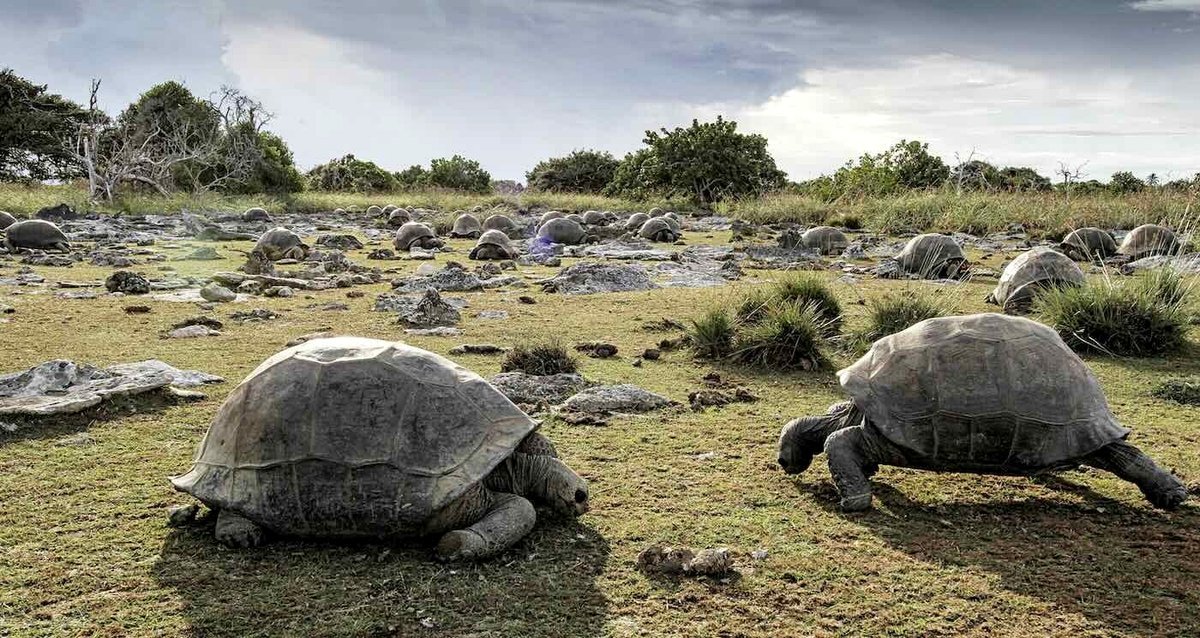
In the 19th century, overexploitation reduced the population to fewer than 1,000 tortoises, but subsequent recovery efforts led to the establishment of a strict nature reserve in 1981 and UNESCO recognition in 1982. Researchers have pointed to this as one of the Indian Ocean’s significant conservation successes. Dr. Nancy Bunbury, a co-author of the study, commented on the challenges of monitoring tortoises due to the thick vegetation on the atoll. The team created a comprehensive baseline for the tortoise population, which will help track changes over time.
Despite the positive news, the study authors warned that climate change is affecting Aldabra, with forecasts predicting longer droughts that may impact food and shade for the tortoises. Invasive species, such as feral cats and black rats that threaten tortoise eggs and hatchlings, are also a concern. The authors suggest that removing these invasive mammals could enhance the tortoises’ chances for future growth and help them adapt to environmental changes. Dr. Dave Hudson from the University of Exeter expressed hope that this data would assist conservation managers in monitoring changes and taking prompt actions as the tortoises face new challenges from climate change and invasive species.
What are your thoughts on this remarkable recovery of the giant tortoise population?
Sources:
Source: Good News Network, by Good News Network