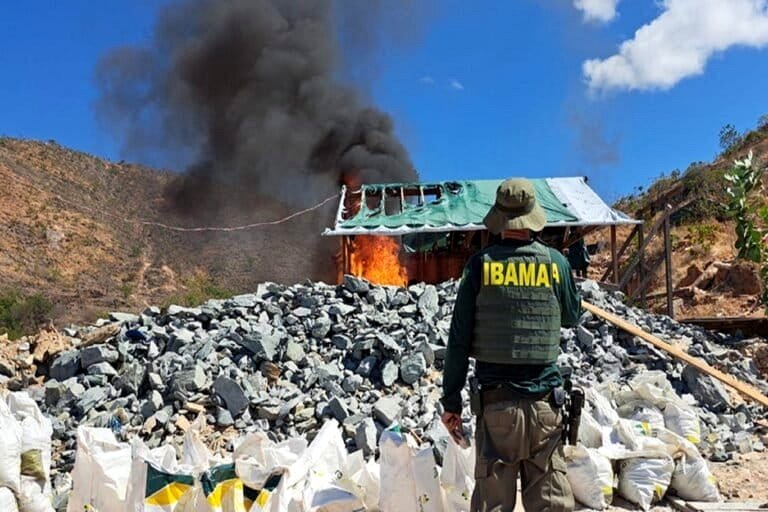
Cyanide use in illegal gold mining is creating new risks for people and wildlife in the Raposa Serra do Sol Indigenous Territory in Brazil. This area in Roraima state has seen illegal miners who utilize cyanide to extract gold from crushed rocks, resulting in ponds filled with cyanide-tainted water. In July, the Federal Police arrested two individuals and confiscated approximately 375 kilograms of a substance they believe to be cyanide. They also seized 1,250 kilograms of activated charcoal, which is another material used in gold processing in Roraima. The police stated that these findings are connected to unlawful gold mining activities within the Indigenous territory.
Earlier, in July 2025, the Federal Police shut down an illegal lab in Boa Vista, the capital of Roraima. This facility contained rocks believed to have originated from gold mining, along with water polluted by cyanide. Reports indicated that these rocks came from the Raposa Serra do Sol area, where miners sent them to the capital for processing to extract gold. Traditionally, illegal miners have used mercury for this process, but mercury trading is banned in Brazil due to its toxicity. As environmental raids have increased, the availability of mercury on the black market has significantly decreased, according to Brazil’s environmental agency, IBAMA. Since no businesses are permitted to sell mercury legally, it has become much more costly on the black market.
Sources:
Source: Mongabay Animals, by Alexandre de Santi